
Avian Anatomy for Artists — Understanding and Drawing the Bill
Lessons from the quirkiest bills in the bird world
A bird’s bill is more than just a pretty face. It shapes how a bird eats, feeds its young, communicates, manipulates its environment, cares for its feathers, and even finds a mate. For artists, it’s also one of the quickest ways to capture the essence of a species.


For nearly every bird family, there’s a distinctive bill shape1. These reflect a species’ ecology and feeding style, and they vary dramatically in size, color, and function. But that very variety is what makes bills so tricky to draw.
Bills are an invitation: to play with shapes, exaggerate personality, and discover character. As you lean in, you’ll find yourself growing both technically and artistically.
In this post, I’ll give you a course in bird bills for artists. We’ll look at the basics of bill anatomy, some common drawing challenges, and—my favorite—how studying the weirdest bills can train your eye and sharpen your skills.
Let’s begin.
The Basics: Anatomy and Morphology
At its core, a bird’s bill is built from two parts: the maxilla (upper jaw) and the mandible (lower jaw). The maxilla is largely stationary, while the mandible is hinged at a point below and slightly behind the eye socket.
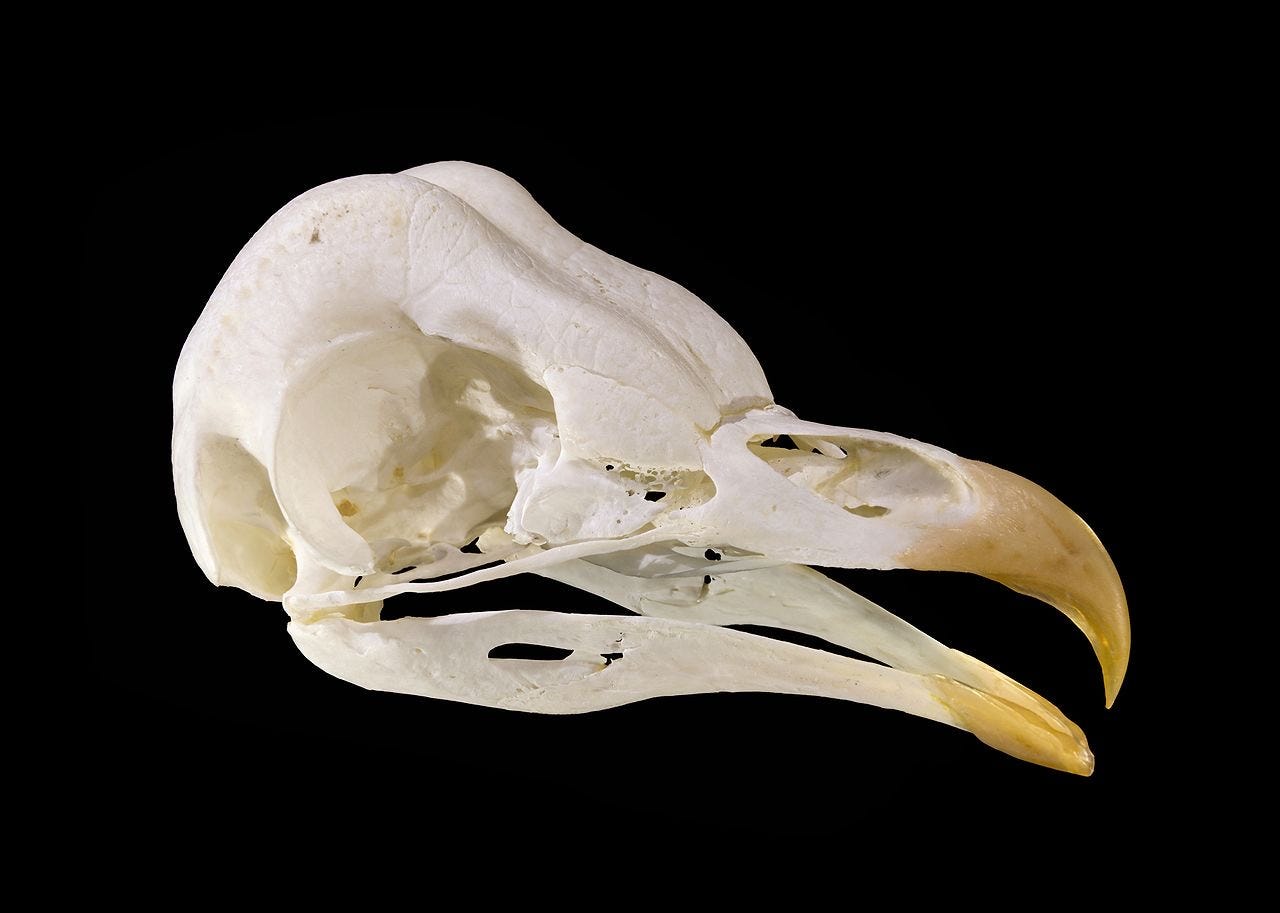
‼️Common mistake alert
When drawing an open bill, beginners often place the hinge too far forward. Remember, it sits well back on the head—below and behind the eye.
The lower mandible fuses at the tip but splits into two plates (called rami) farther back. When viewed from below, that split is U- or V-shaped—an easy-to-miss but useful detail when sketching underside views.
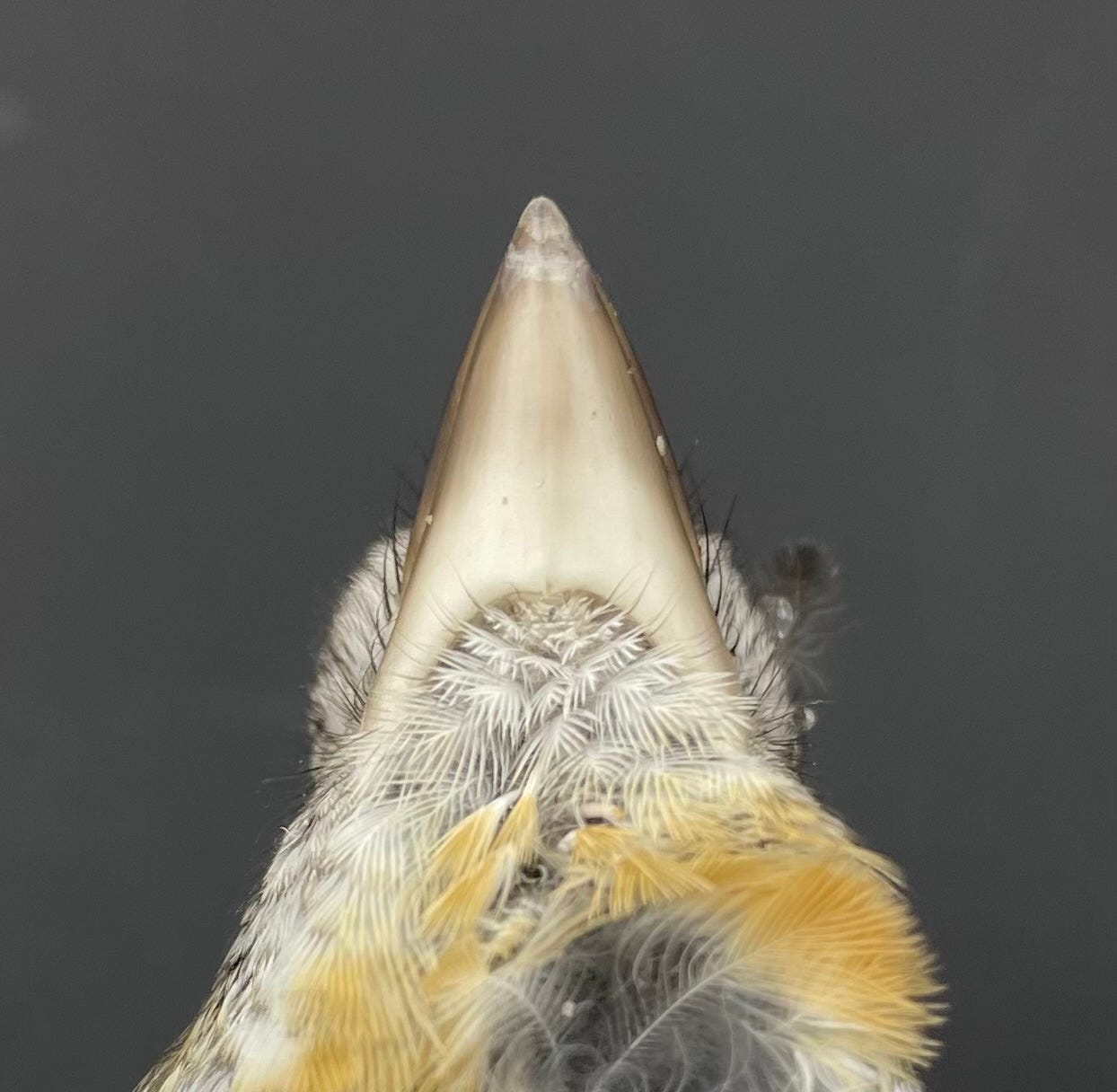
The bones are sheathed in keratin (like human fingernails), which gives the bill its surface texture and color. Some species show seasonal changes, sex differences, or even temporary growths (such as the pelican’s cask) that shed after breeding.
Most bills also have nares (nostrils). Their size and placement vary, and in some birds—crows and ravens, for instance—they’re hidden beneath feathers called narials.
And while birds don’t have lips, they do have a soft fold of skin called the gape at the corners of the mouth. In young birds, the gape is often brightly colored, which may signal health to their parents.
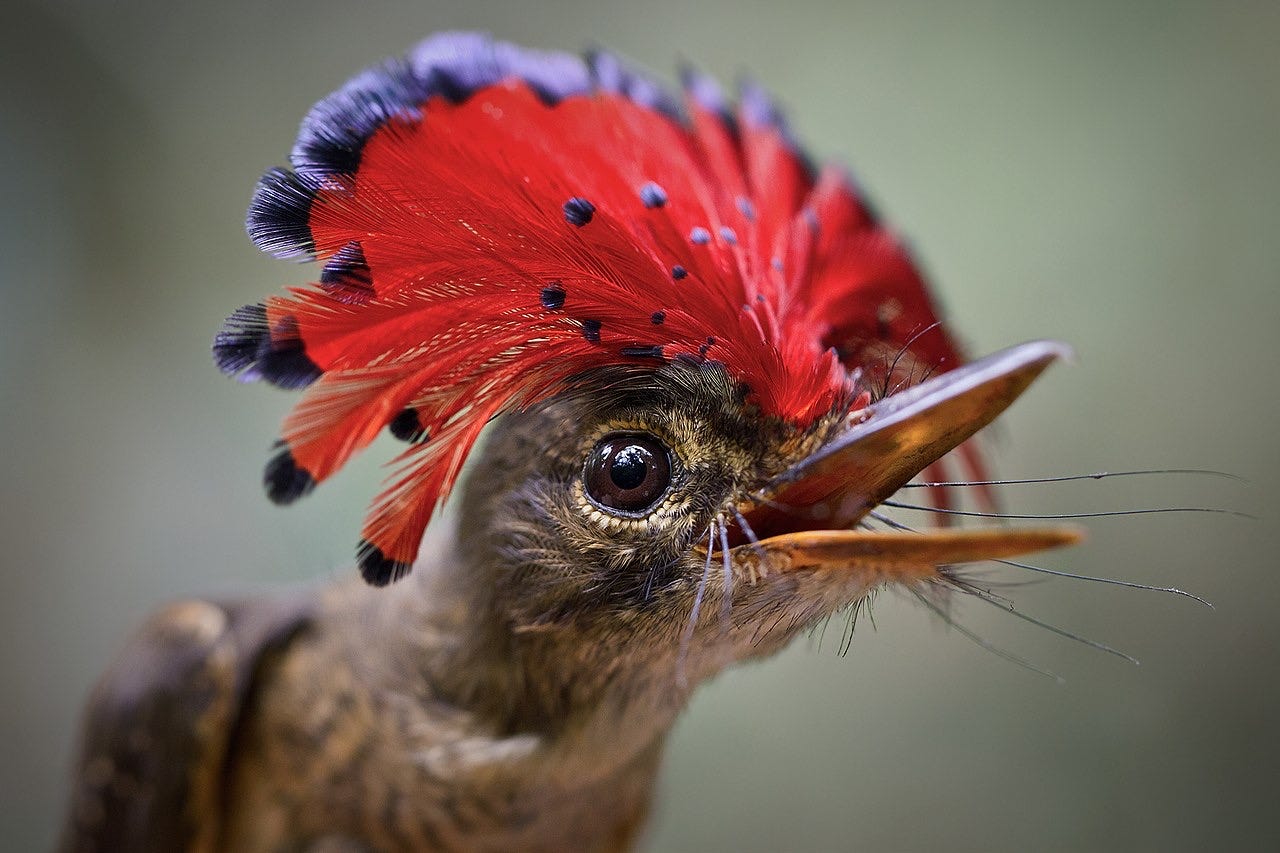
One of my favorite details: rictal bristles. These slender, hairlike feathers often frame the bill in flycatchers and other insect-eaters. For artists, they’re a chance to add subtle expressiveness and texture to a drawing.
Artistic Challenges Posed by Bills
Drawing a bird’s bill calls on many skills at once:
Modeling three-dimensional form
Measuring and proportion
Foreshortening
Translating subtle detail from two-dimensional reference photos
Bills stretch you as an artist because they demand precision and observation. But that’s also what makes them so rewarding.
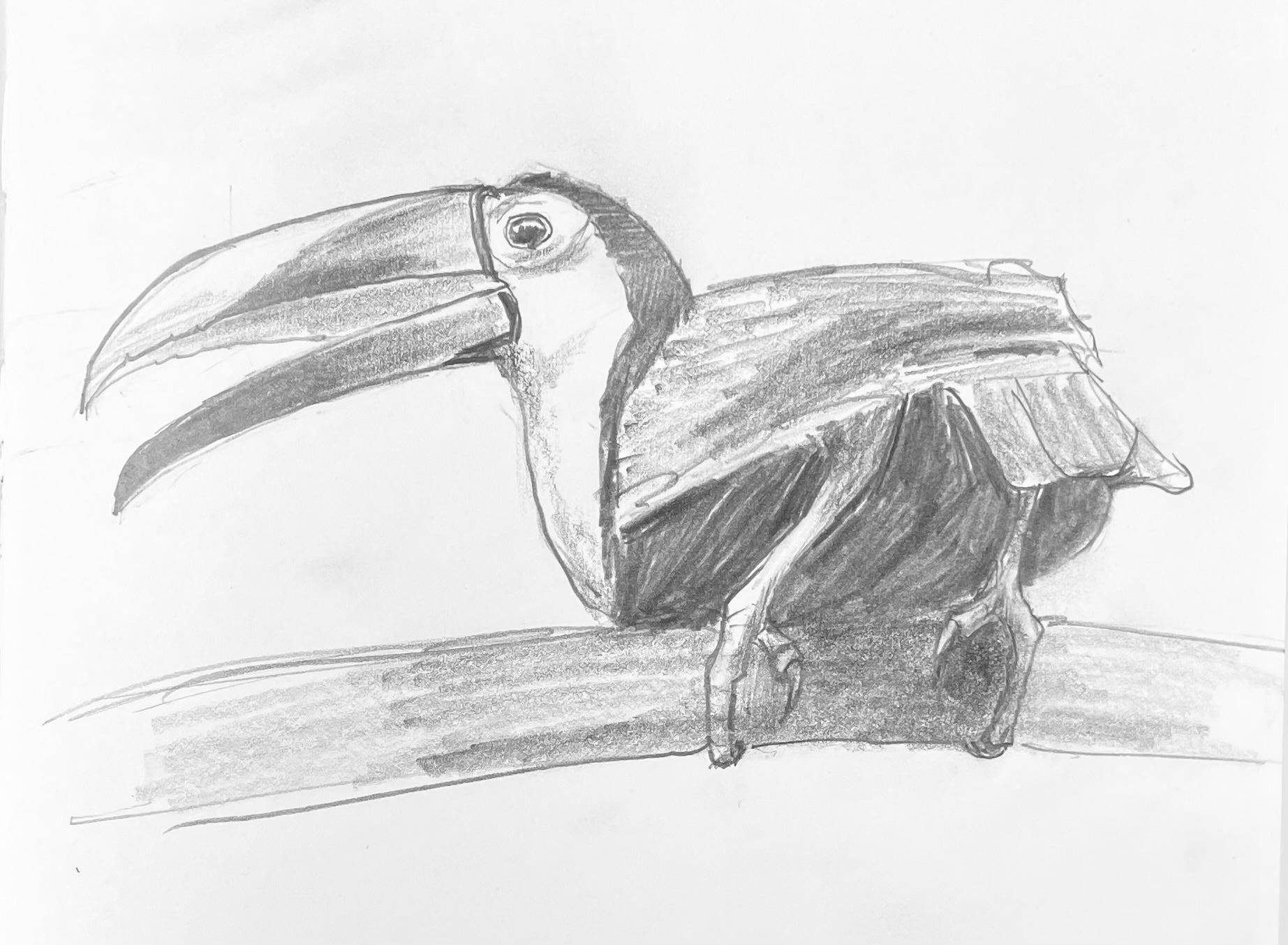
Unusual bills—the oversized schnoz of a toucan, the deeply curved ibis, the flat-spooned spoonbill—make fantastic practice subjects. Their extreme forms force you to slow down, measure angles, and really see how shapes connect in space. Once you can draw the exaggerated, the ordinary suddenly feels manageable.
👉 If you’re a free subscriber, you’ve got the essentials: a primer on bill structure and why bills are such a powerful training ground for your art. Insiders, get ready to go deeper—into step-by-step drawing strategies, common pitfalls, practice exercises, and a library of bill photo references I’ve collected myself—that’s all waiting for you on the Insider side of this post.

.jpg)
