
Can doubts and insecurities make you a better artist?
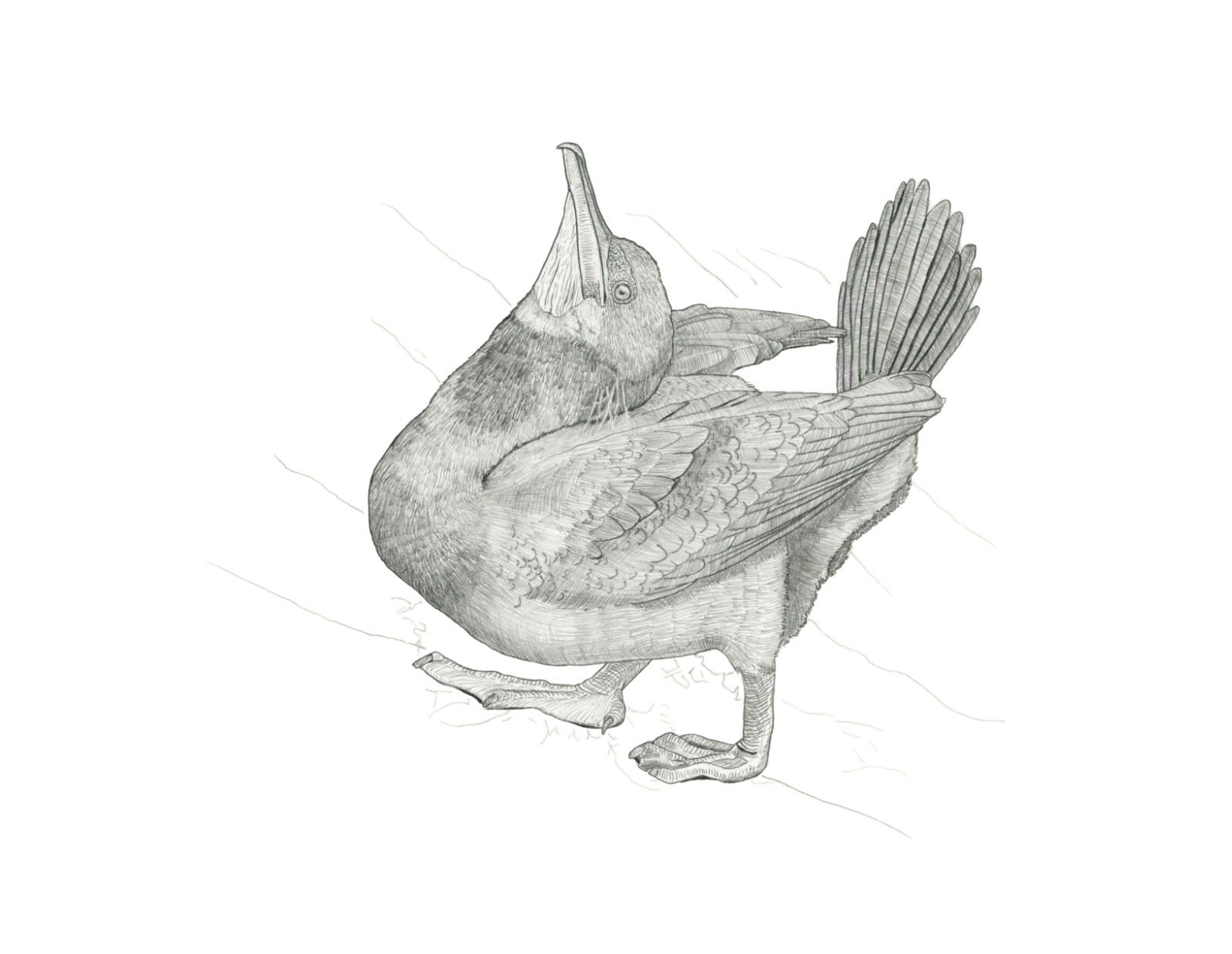
A while back I went through a bout of artistic insecurity.
I had started working on the preliminary sketches for a book contract, I found myself feeling very self conscious. I started second guessing myself at every turn. Mostly, I found myself worrying that my preliminary sketches weren’t going to be good enough.
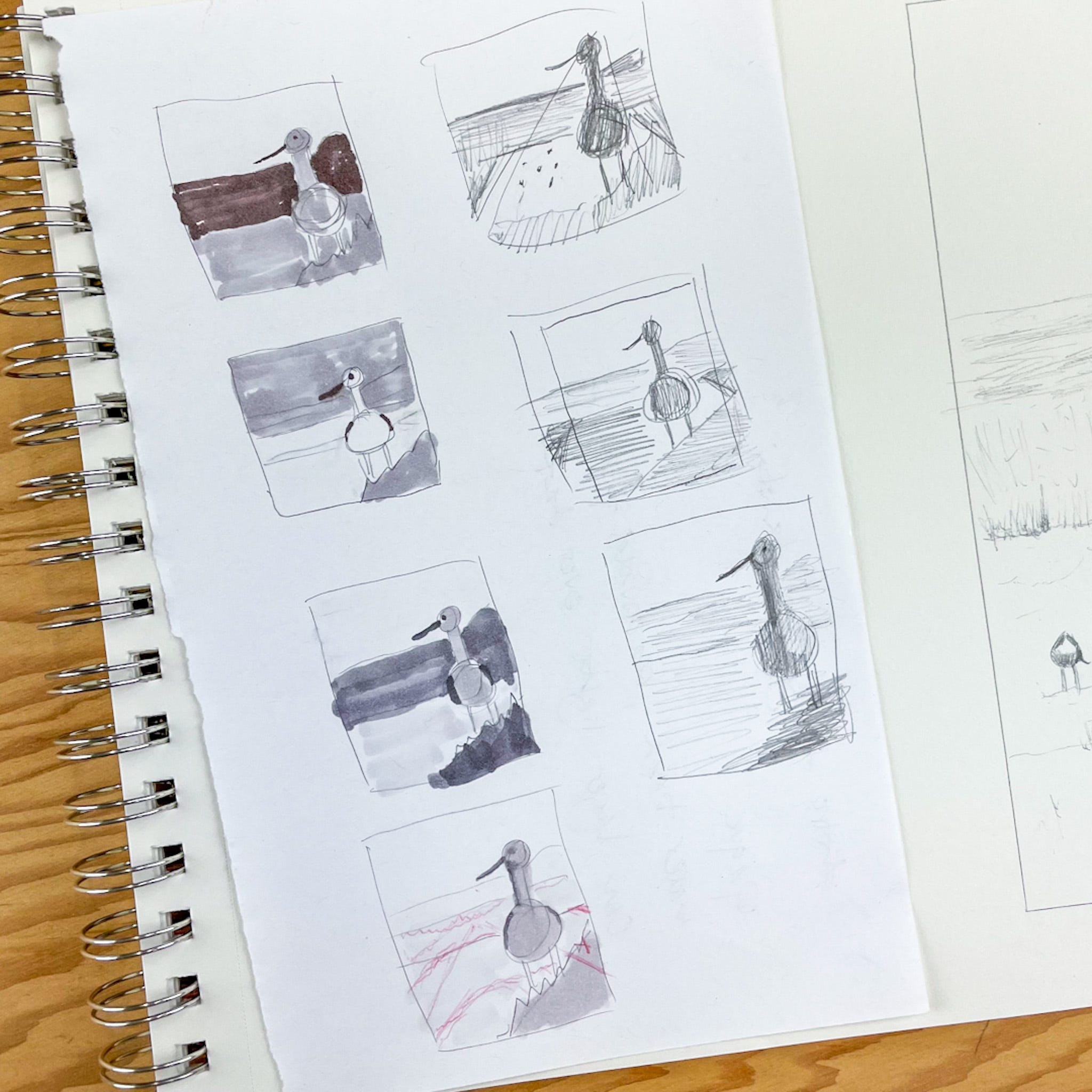
Mind you, I had prepared the author to expect very rough thumbnail-style sketches for the preliminaries. These sketches were simply to give the author choices of poses and positions of each bird. The fully realized, detailed sketches were the ones that really counted. But somehow, in my mind, I managed to over-inflate the importance and significance of these preliminaries.
I shared my difficulties with others and got many supportive and encouraging comments, but one stopped me in my tracks. She wrote:
“We would stop evolving if we would not have these insecurities and doubts; they are so necessary in the process.”
Wait. What?
Insecurities and doubts are necessary for evolving as an artist? Really?!? This was an idea that deserved deeper exploration. Immediately, I turned her comment into a journaling prompt.
How do my insecurities and doubts help me evolve as an artist?
I’ve always thought of insecurities and doubts as negative forces that are conspiring to hold me back and prevent me from being successful. But what if these insecurities and doubts are here, not to harm me, but to urge me forward, to invite me to innovate, or be more creative, or persist?
To explore this idea, I unpacked the journaling prompt.
First, I asked myself:
What does it mean to evolve as an artist?
When I think of evolving artistically, I first think of growth—becoming more skilled, gaining confidence, getting more rooted in my abilities. In other words, the opposite of feeling insecure and doubtful. But having confidence as an artist doesn’t mean that I don’t question myself or interrogate my choices.
Some of the questions I ask often are:
How can I improve this composition?
What adjustments can I make to create a more dynamic and alive appearance of my subject?
How can I become more free and expressive?
What do I need to do to become more skilled?
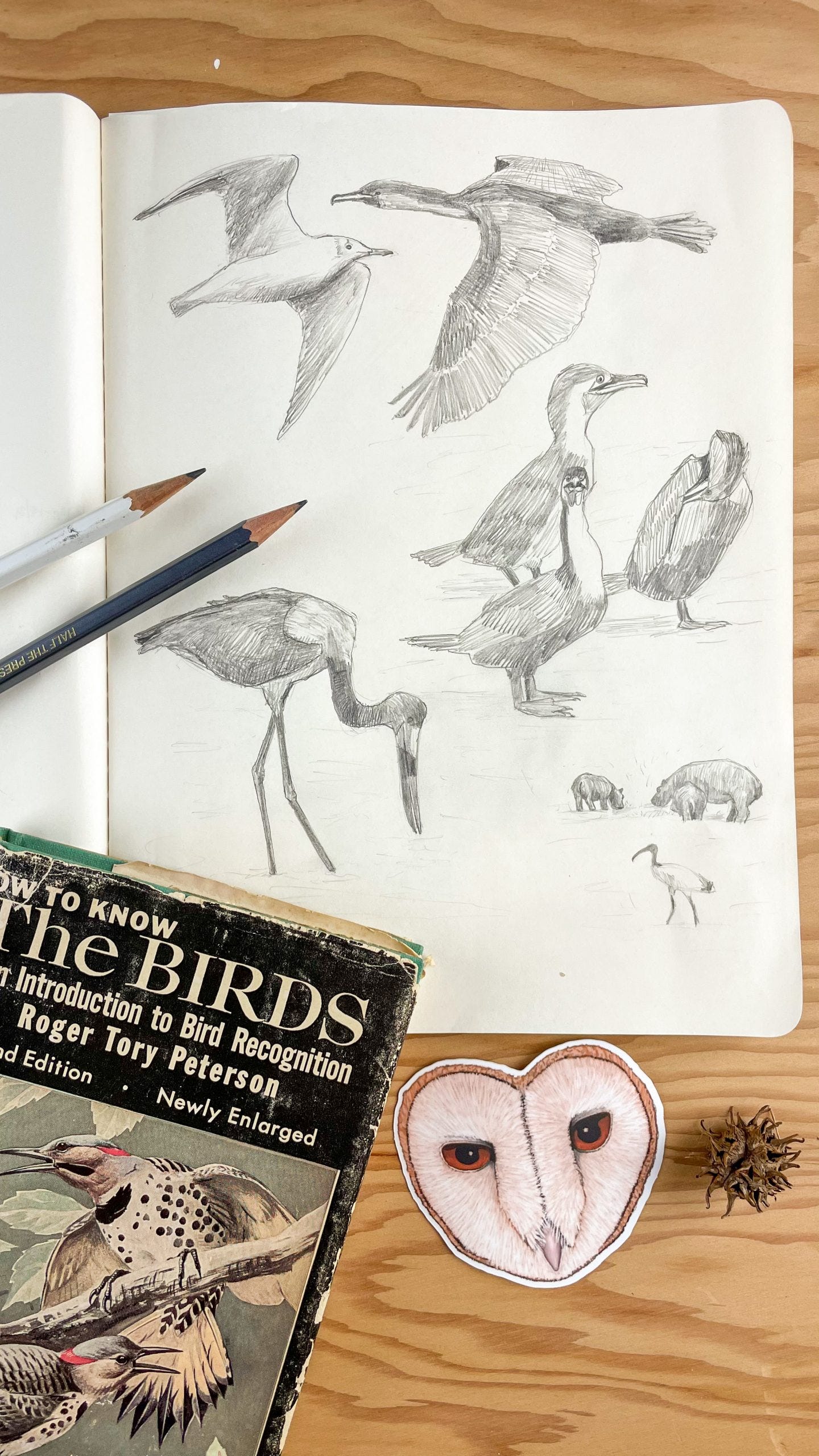
I know that evolution is not linear or progressive. It goes in fits and starts. Sometimes forward, sometimes to the side. There are plateaus, tangents, dead ends. And sometimes stillness. And all these stages and phases contribute to the artistic journey in some way, as long as I persist, as long as I don’t give up.
Having articulated what evolution as an artist means to me, the next question I asked was:
How do insecurities contribute to evolution as an artist?
When I am feeling insecure as an artist, it’s usually because I’m worrying about what other people are going to think about me. I find myself particularly concerned with the perception that I might be seen as unskilled or not having sufficient ability. I enter a comparison mentality where I start to look at other people’s work and play a rating game: mine against theirs. Quickly, envy or pride steps in to render judgements—am I better? Or are they worse? This is obviously a dead end; it’s a toxic mindset and I am the one who gets poisoned by it.
An alternative to the comparison game is to look more tenderly, with love and compassion, at myself and my efforts and to release any worry about how I might be perceived.
An alternative to the comparison game is to look more tenderly, with love and compassion, at myself and my efforts and to release any worry about how I might be perceived. I have a problem with using accomplishment as a surrogate for my worthiness. In my heart, I know that my worth as a person does not come from what I achieve. My worth is not determined by what other people think of me.
Insecurity as an artist can become a signal to me that I need to pay greater attention to my own inner guidance system. Instead of looking to others for some kind of twisted validation that requires me to be a better artist than they are, I need to ask myself: What do I need right now?
Some of the questions I might ask are:
Am I hungry?
Do I need rest?
What is my emotional state?
How can I show compassion for myself?
With a better understanding of how insecurity might function, I started to look at its cousin, doubt. I asked:
How does doubt help me to grow artistically?
To me, doubt is a slightly different animal than insecurity. Doubt feels more like “Am I doing this right?” It’s a sense of uncertainty and a lack of trust in myself. I begin to feel unmoored. The antidote to this feeling is to become grounded.
When I feel grounded, I am present in my body. A deep breath, a moment of mindfulness, is sometimes all I need to get out of my mental labyrinth and back into a clear state of mind, rooted in my body. Other times, I need a walk, to do some yoga, to get a hug from my husband, or have a play session with my dog. Yes, even cleaning house can help me to feel more steady on my feet.
Doubt, like insecurity, becomes a sign that I need to make use of the tools and skills I’ve acquired to activate mindfulness and become fully engaged in the present moment.
As an artist, being fully present means leaving thinking behind and allowing the mind-body connection to do its job. I stop rethinking every line or brush stroke and simply let my eyes tell my hand what to do. I get out of the way and let the muscle memory do the work.
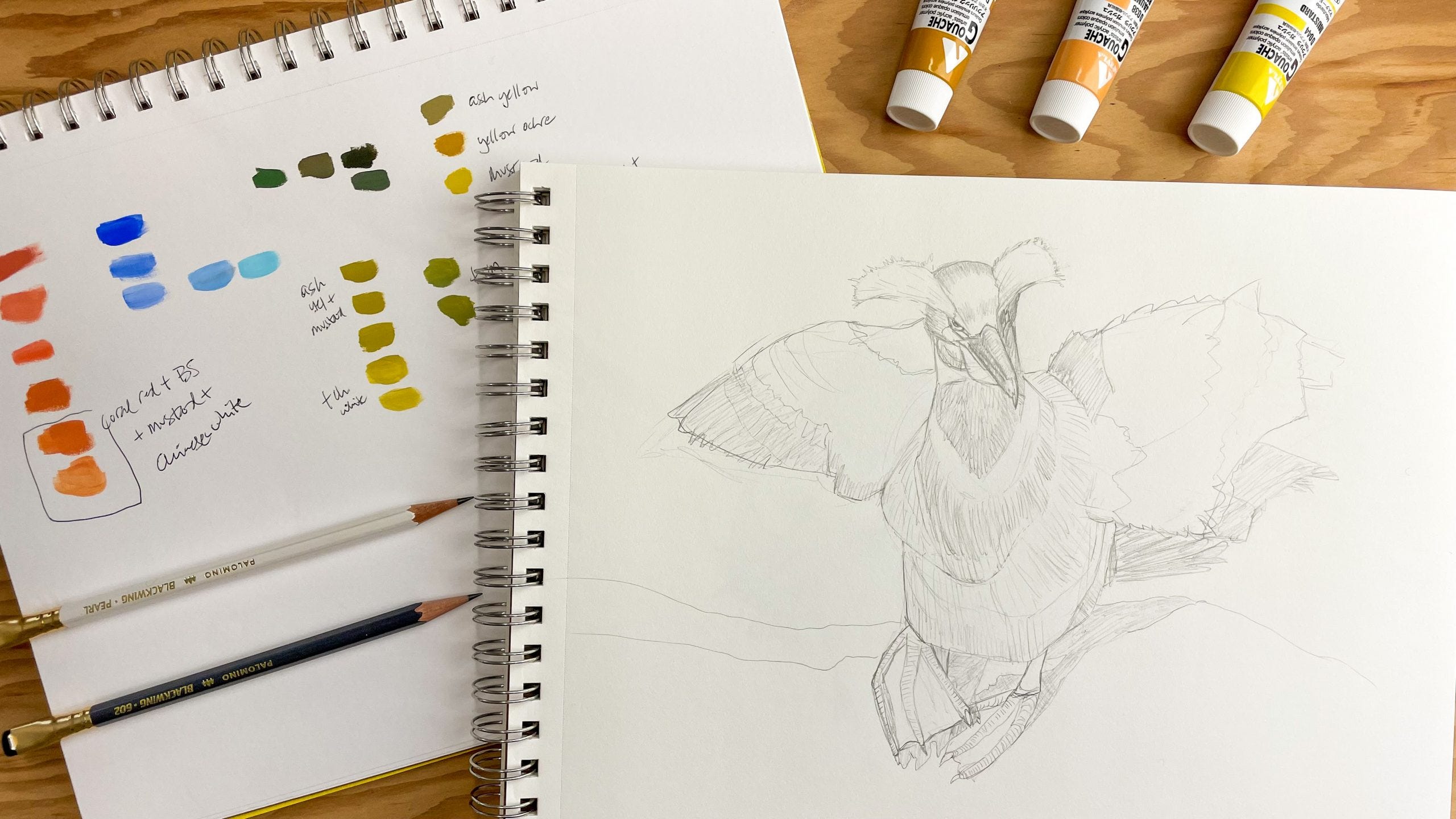
How might I befriend insecurity and doubt so they can teach me the important lessons I need to learn to evolve as an artist?
I’ve tried to boil these insights into actionable steps. Here’s what I’ve come up with:
When I start to feel insecure, that’s a signal to check in with myself and ask:
Am I hungry?
Do I need rest?
What is my emotional state?
How can I show compassion for myself?
If I am feeling doubtful, then my first course of action is to get grounded. Ways to do this include:
Use mindfulness
Get some exercise
Clean house for a while
Turn on some music and dance
Do some kind of playful drawing or painting that gets me out of my thinking mind
Often, I found myself looking too far ahead in the process. Instead of simply gazing at the next step, I became mentally lost in long journey ahead that would eventually result in 41 finished illustrations. Naturally, this made me feel anxious.
Truly, the next step so small, so insignificant, so easy that it can be overlooked, discounted, dismissed. Yet the smallest baby step is actually the most important—just do the next thing.
Truly, the next step so small, so insignificant, so easy that it can be overlooked, discounted, dismissed. Yet the smallest baby step is actually the most important—just do the next thing. And after that, the next next-thing. And keep on walking, one simple next-thing step at a time.
That’s when I realized the mistake I’d been making.
I had perceived my artistic insecurities and doubts as stop signs but they’re actually invitations: Come, step out on faith, dear artist. You cannot see where this journey will take you. And that is as it should be.
If you enjoy my work, you can support me by subscribing, sharing posts, or becoming a paid subscriber. Use the button below to get a discount on an annual subscription.
You can purchase stickers and original art here.
Want to learn how to draw birds? Take my online class.