
I Can See Your Voice: the bird edition!
Follow an illustration from sketch to publication
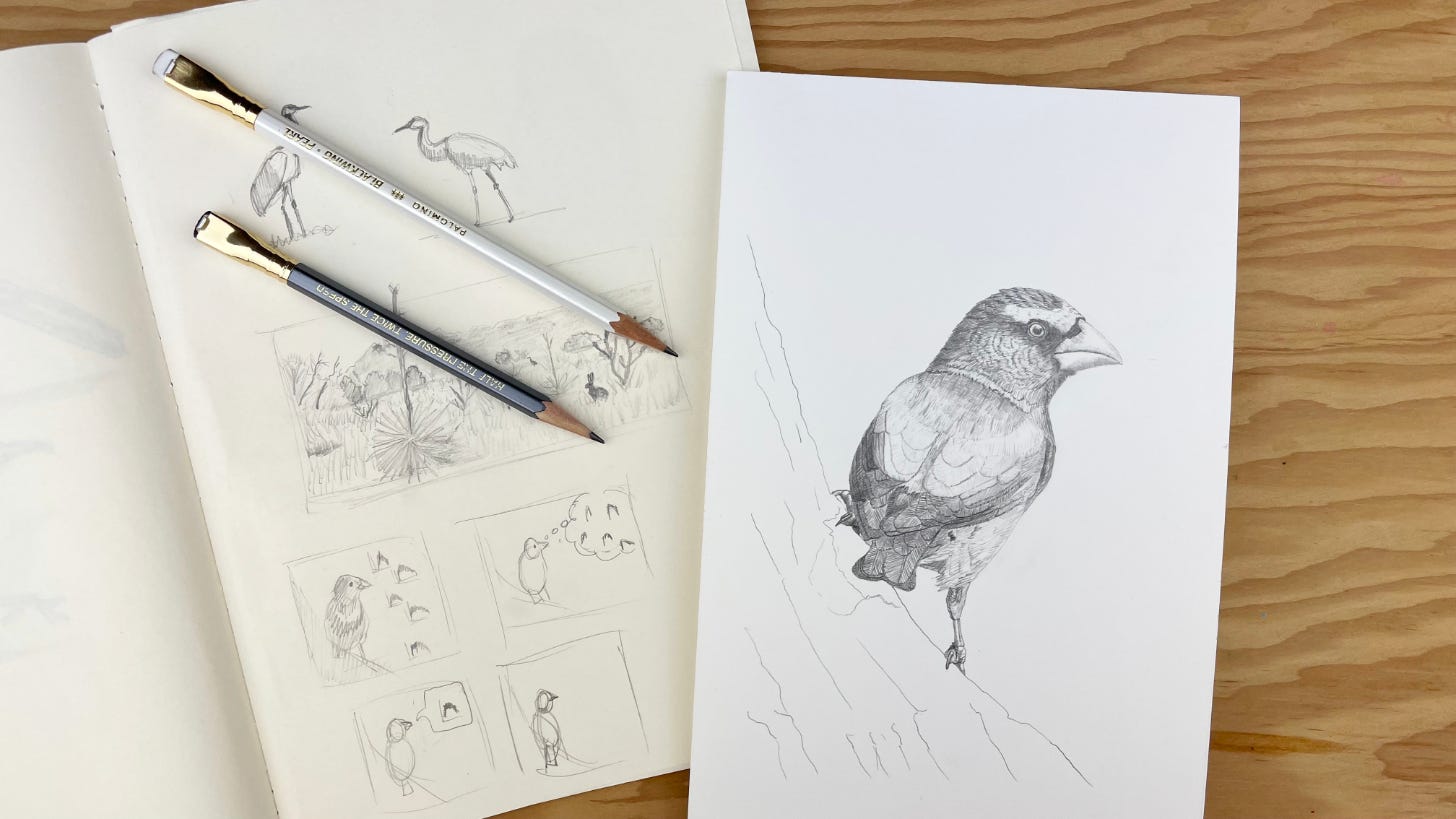
Today, I’m sharing my process of creating a natural history editorial-style illustration from the rough thumbnail ideas all the way to the final published piece.
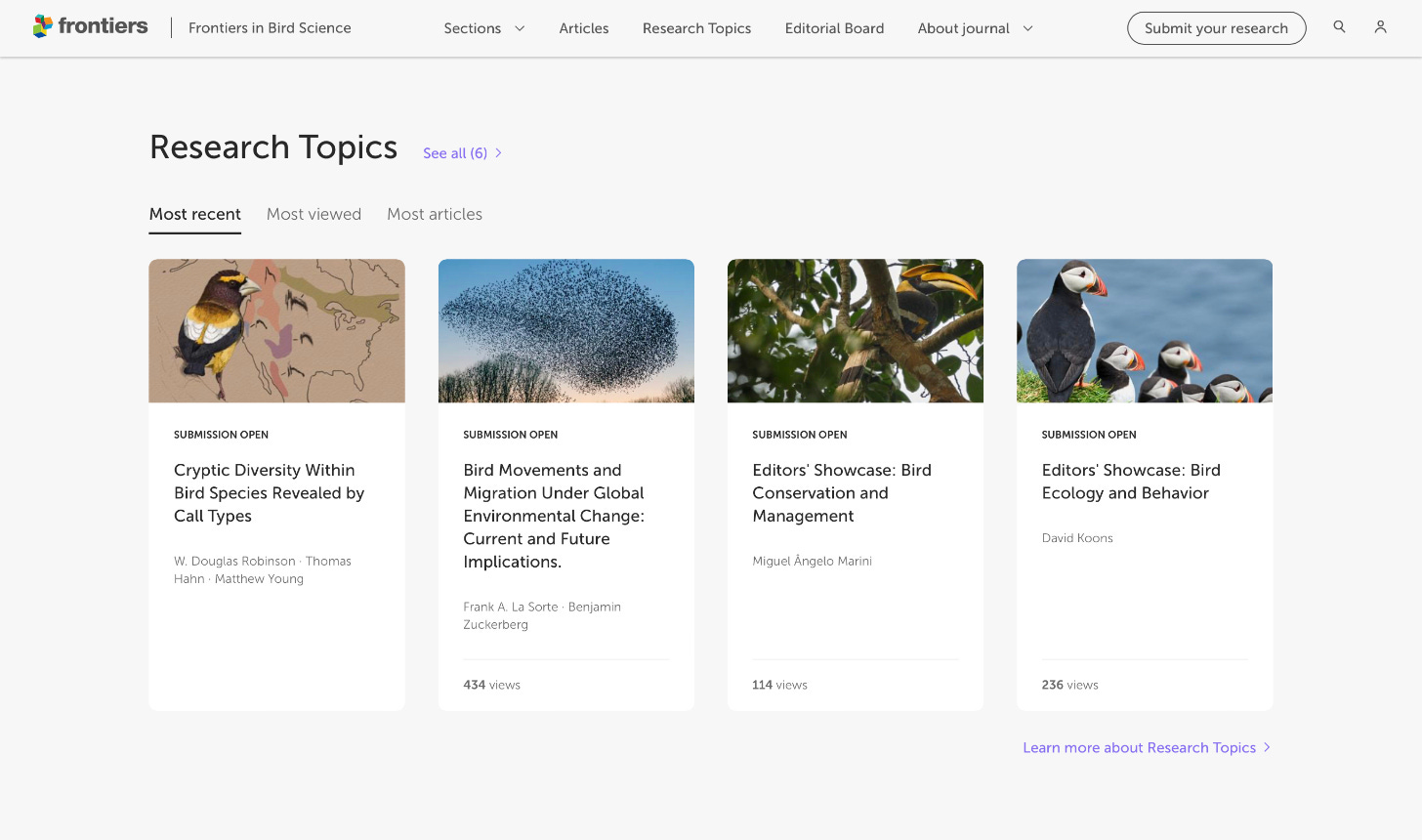
Last year, I was asked to create an illustration about bird vocalizations. The illustration was intended for the Frontiers in Bird Science website for a call for papers entitled: “Cryptic Diversity Within Bird Species Revealed by Call Types” (which just rolls off the tongue, does it not?). The accepted papers would be included in a special issue of the journal.
My first set of thumbnails were geared more toward how to give the viewer a quick indication of the call to action which was to submit a paper on bird vocalizations. As you can see in the image below, I played around with three concepts and attempted to give the idea that the bird was making the sound or thinking about the sounds.
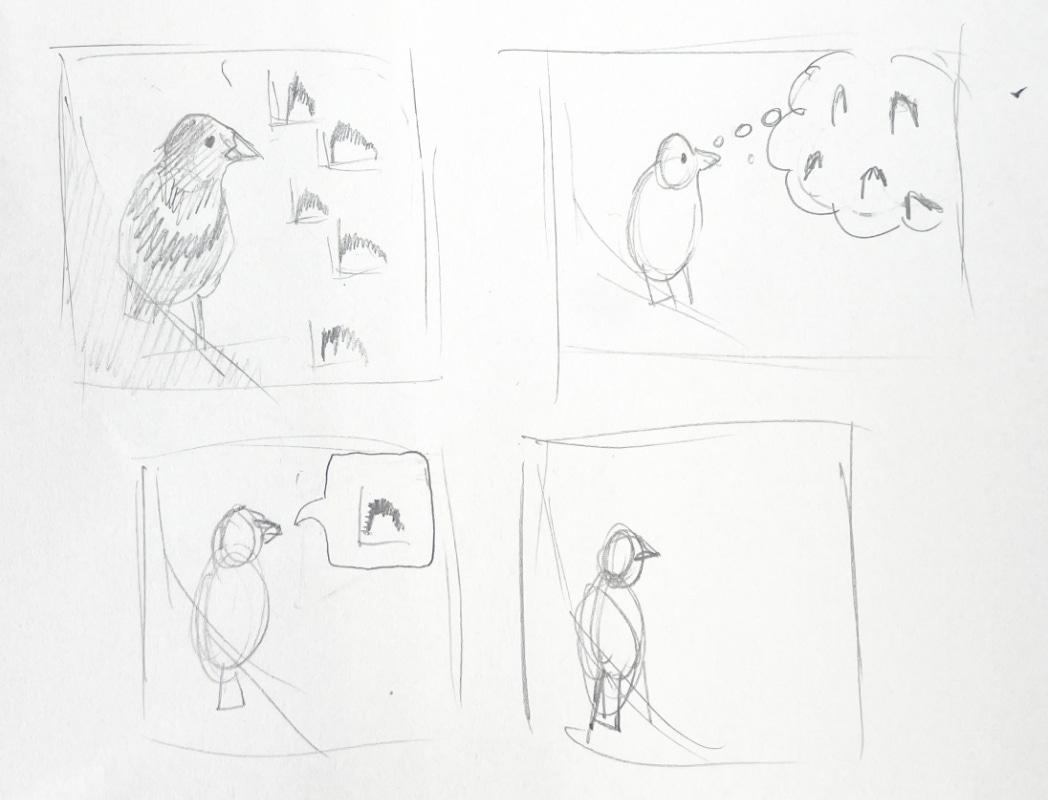
After getting some feedback, I chucked all these ideas and decided to use a map and illustrate the calls across the species’ geographic range.
Because I have experience with Evening Grosbeaks and their calls (you can hear one of these calls here), I chose Evening Grosbeak as my example species for the illustration. Also, I already had a completed drawing so that gave me a bit of a head start. Score!
A wee bit of background just in case you don’t know anything about Evening Grosbeaks and their calls.
Researchers have examined recordings of Grosbeak calls over all of North America and produced sonograms which show the frequency range and length of the call in seconds (or milliseconds). Plumage-wise, all the Grosbeaks look the same but in different parts of the range, they speak in different calls. We don’t know what these calls mean or why different populations have different dialects, but they may allow the birds to communicate with each other about food, mates, or predators.
I imported the drawing into Procreate for the rendering. (Tech note: the drawing was scanned at 300dpi and I removed the background to create a png.) My first task was to color the image which I did using techniques I learned from a Domestika course by Jesssica Roux called Natural Illustration with Digital Painting. (Truly one of the best purchases I’ve ever made!) I added natural paper texture to the illustration to create the sense that the whole piece was done on paper, rather than digitally.
Next, I imported an outline map of North America and using a map of call types, drew in the geographic ranges and filled those with half-tones. I traced example sonograms and superimposed them on or next to the geographic ranges to which they belonged.
Here, a problem arose. The halftones didn’t read when the illustration was reduced in size. Truth be told, they don’t read very well in a larger size, either. I knew from the start that the illustration was going to be reduced and cropped by didn’t consider what the halftones would look like in teensy-tiny postage-stamp size. Oops.
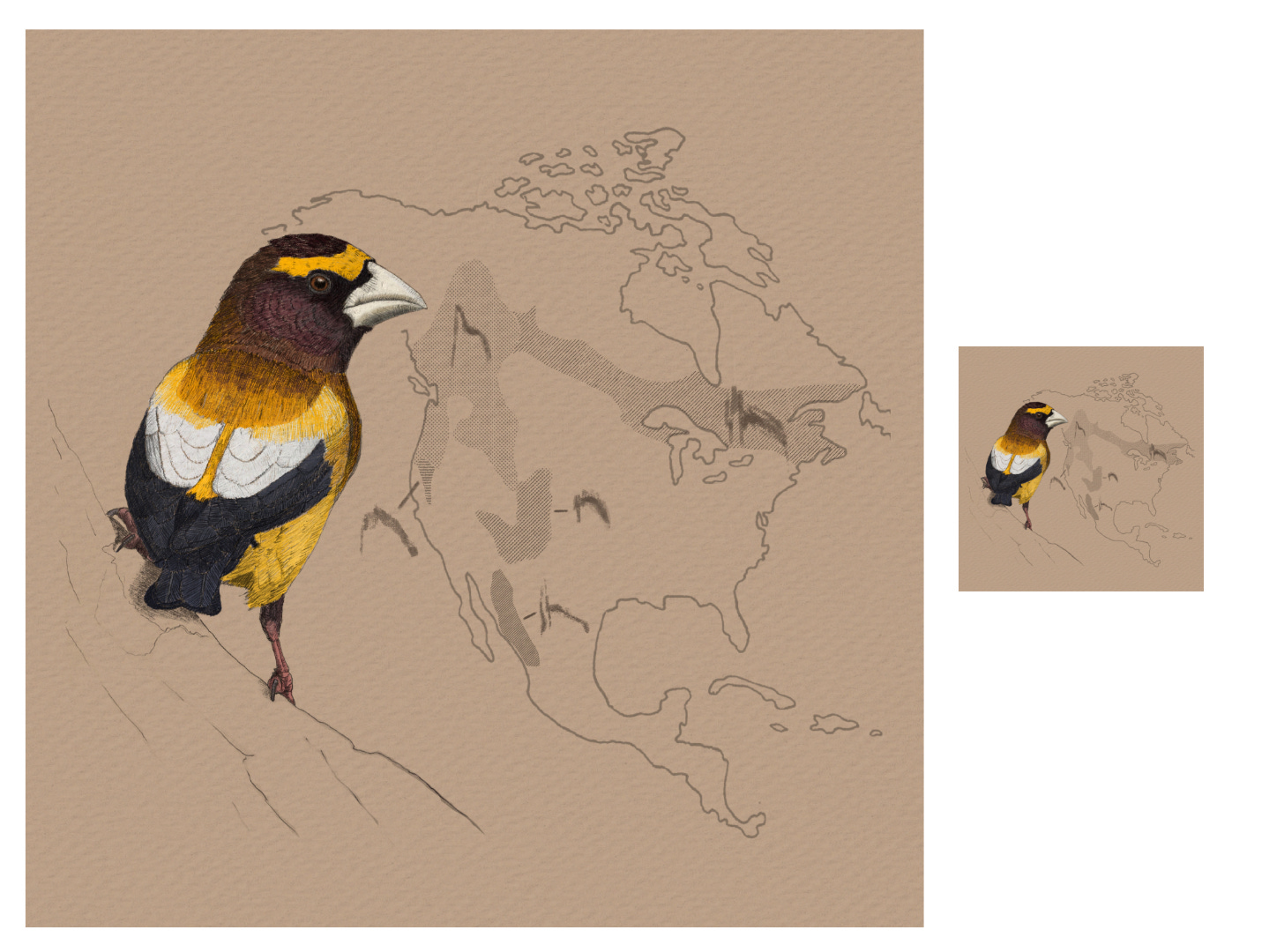
Even though I felt that multi-colored blobs weren’t that great an idea, multicolored blobs would show up when the illustration was sized down to a postage stamp.
I chose colors that looked good against the tan background, were sufficiently different from each other, and had reasonably good contrast. I also made the map and sonograms darker.
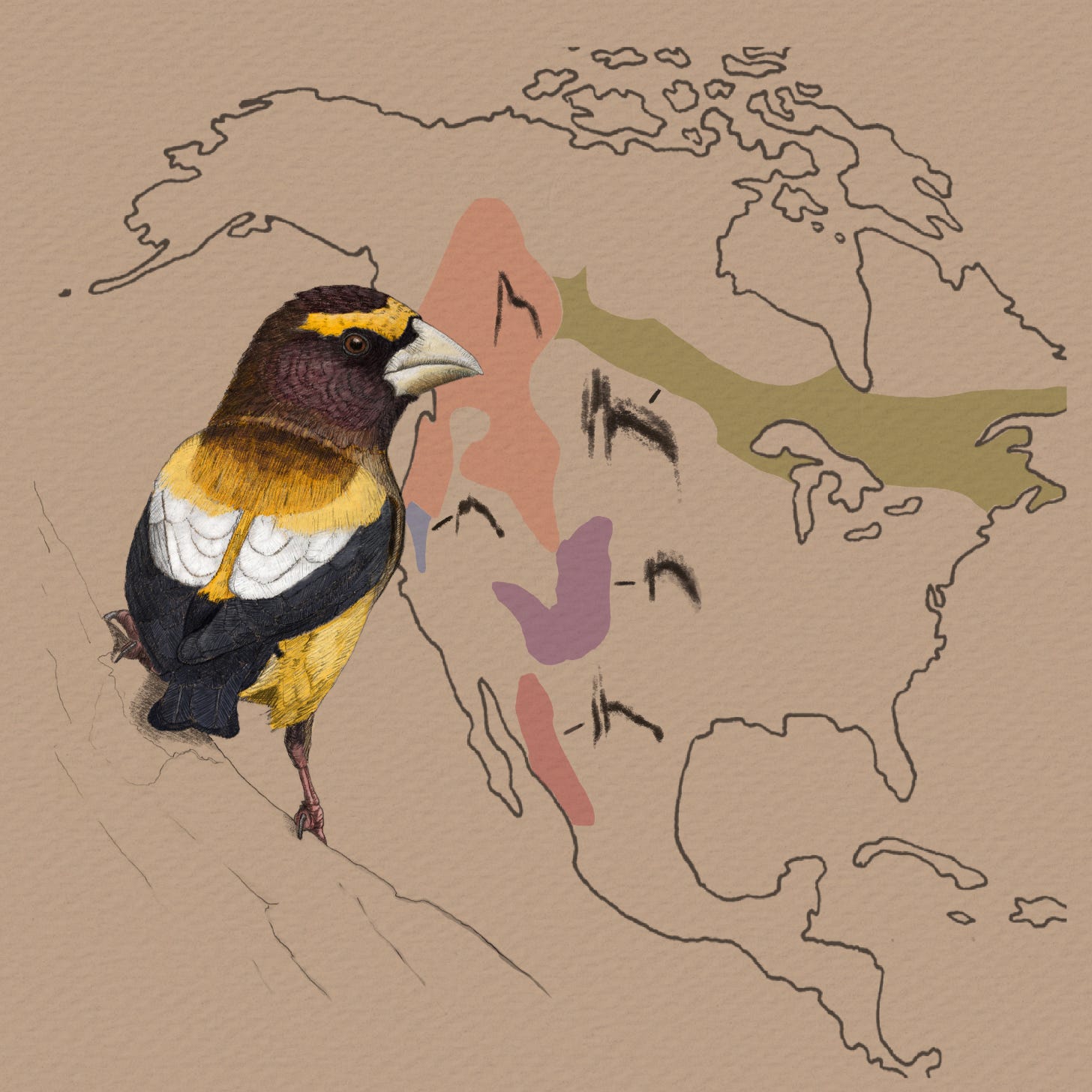
Finally, I had to make sure that when the image was cropped, the desired information didn’t get snipped off. I didn’t have any info from the publisher so I spent a while looking at full versus cropped images on their website and took a guess as to where the crop would fall. As luck would have it, I got it right. Yay!
A few months later, I was asked to produce sonogram images for figures to appear in a paper on Evening Grosbeaks. These were made by tracing the calls using Procreate and required much discussion with Douglas (my husband and lead author of the paper) and hand-sketching the sonograms before tracing them. The issue here was that the recordings were made in noisy environments so “seeing” the bird’s voice in the midst of all the clutter was very difficult. The images below show a noisy original call image and my cleaned-up traced version.
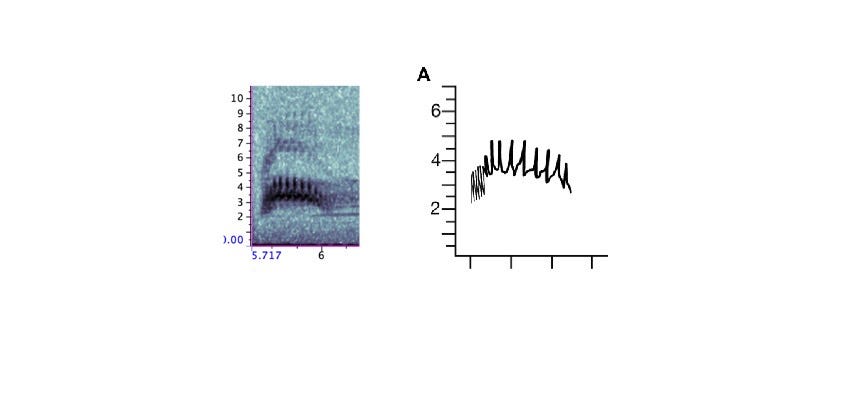
There were all sorts of other problems to solve along with placing each call on the correct axes and making sure all the labels and whatnot were exactly where they should be. All that fun stuff was done in Photoshop.
As an added bonus, my original illustration from the call for papers was included as Figure One in Flight calls and trills of Evening Grosbeaks can be used to map movements and ranges of call types 1 and 2. Yippee!
I hope you enjoyed this look into how I created my illustration. Sing out if you have any questions!
Thanks for reading!
Tara Kate