
Simplifying What You See
Starting with a chunky parrot
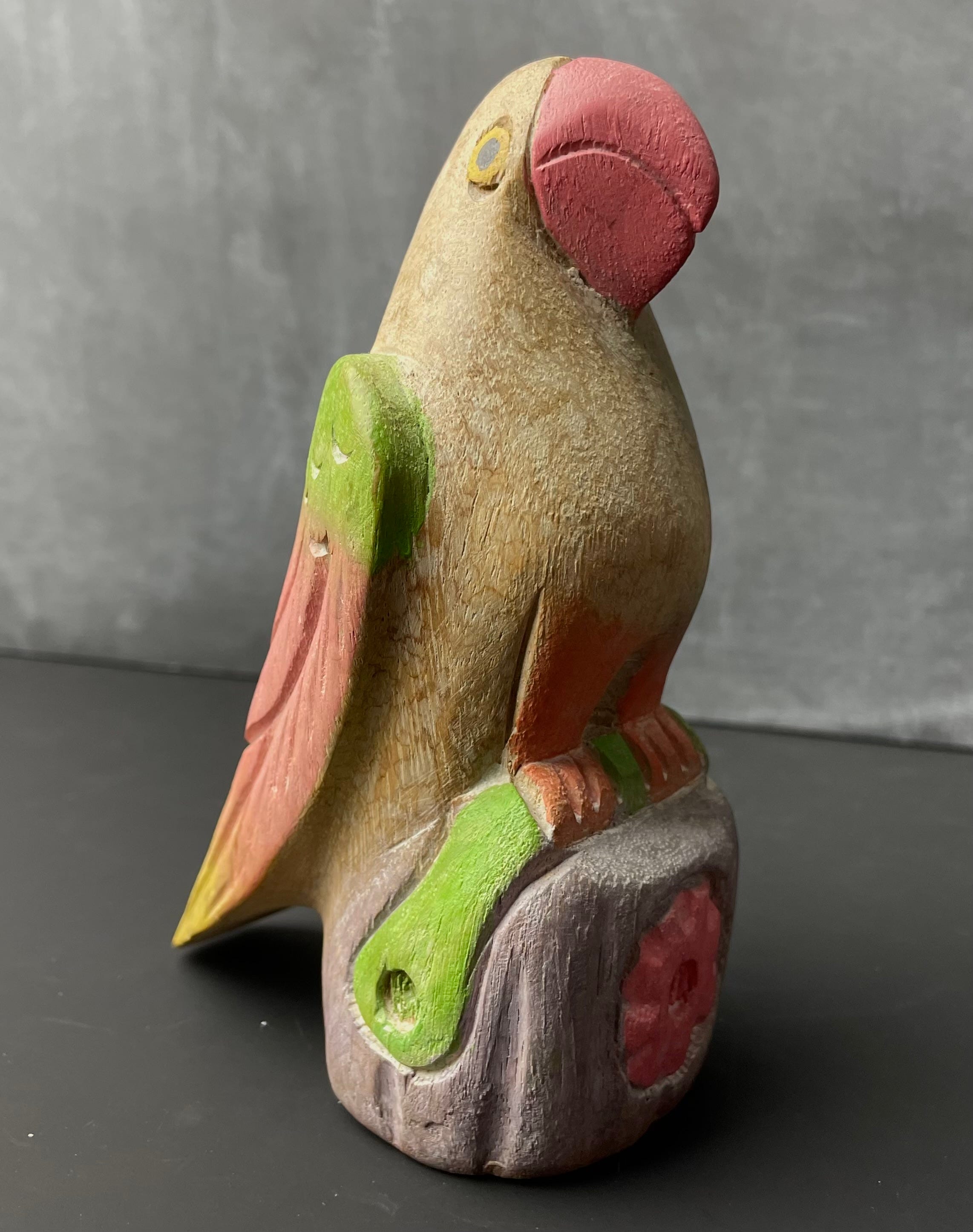
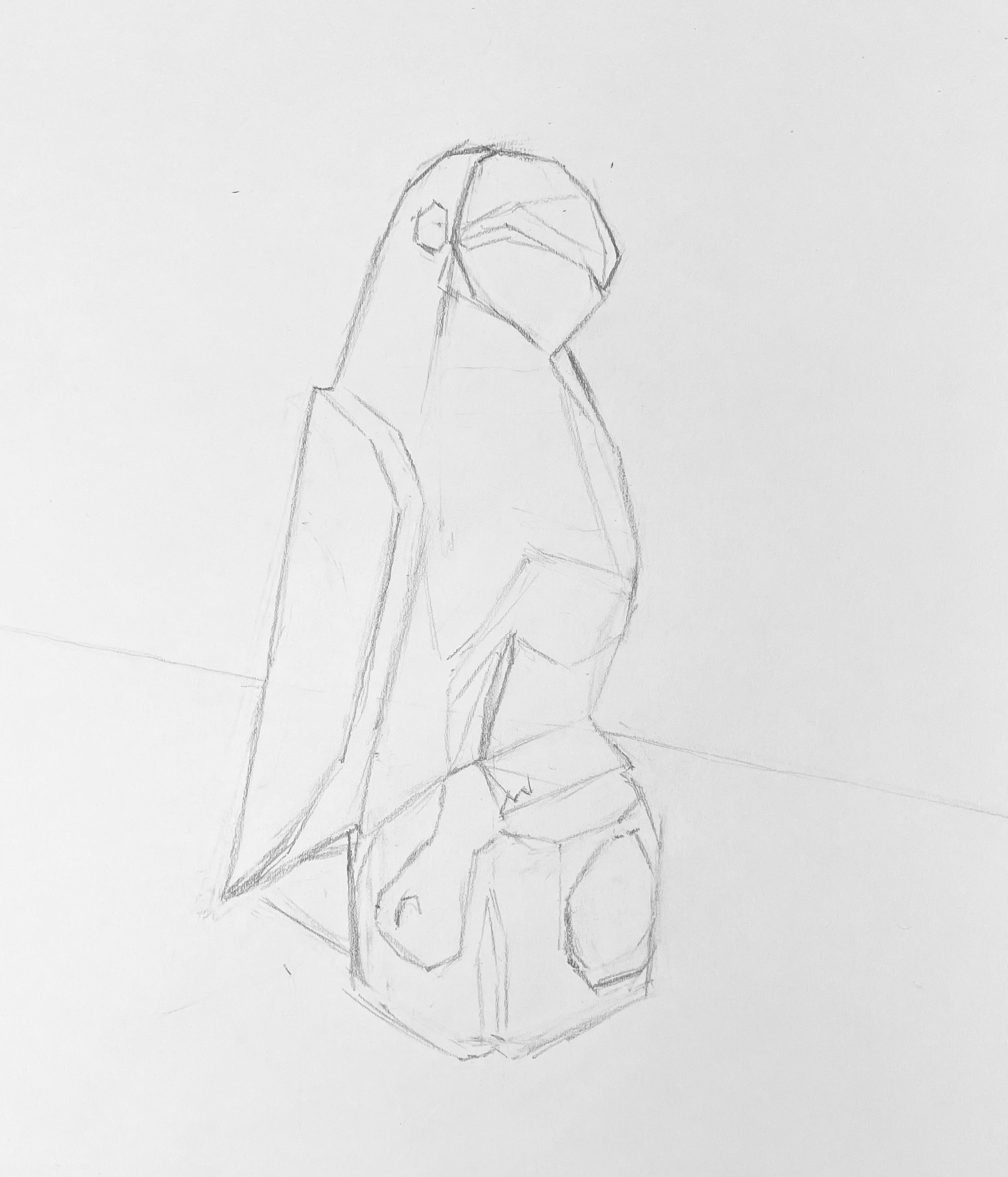
This post started as a drawing lesson. My idea was simple. I have a small wooden carving of a parrot. He’s kind of chunky and very simple and very fun to draw. I planned a nice, succinct lesson: Draw the parrot, map the values, add the shading using a five-step value scale. Pretty standard stuff.
But as I worked on preparing the lesson, something shifted.
Attention
Carved from a single block of wood by some unknown craftsperson in Panama, there is a wonderful economy of shape and a sweet abstraction in how the bird is depicted. I placed the carving under a strong light source and observed how the shadows fall on the surface of the bird. Suddenly, I was seeing this small art object in a new way. I found myself wishing I could sit with the carver and watch the process of making a little wooden bird.
Limitation
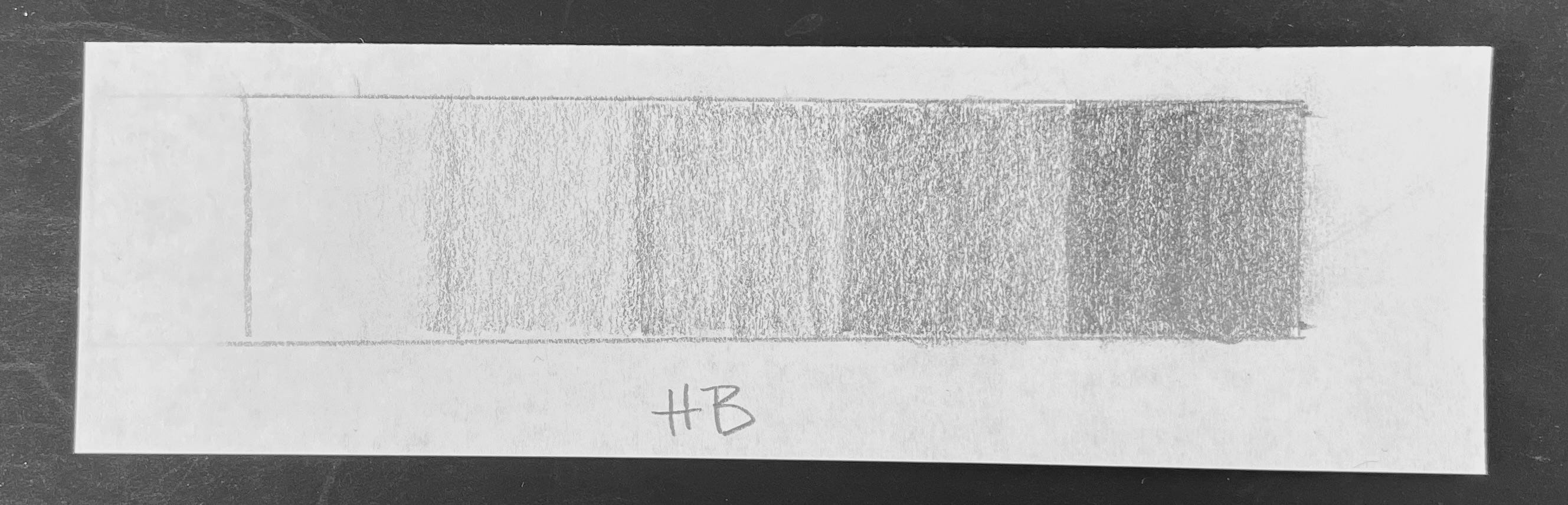
I used my favorite HB pencil and made a simple five-step value scale on a strip of paper. Once you’ve found the darkest dark (value five) and the lightest light (the paper itself), there are actually only three values to work with. But rather than thinking of this constraint as a problem to solve, it can become an opportunity to practice decision-making. With sharp edges and clean steps, there can be no waffling with in-between values.
Interpretation
The hardest part of the drawing was deciding when a change in value was significant enough to become a step up or down. This boils down to interpretation: how do I see this?
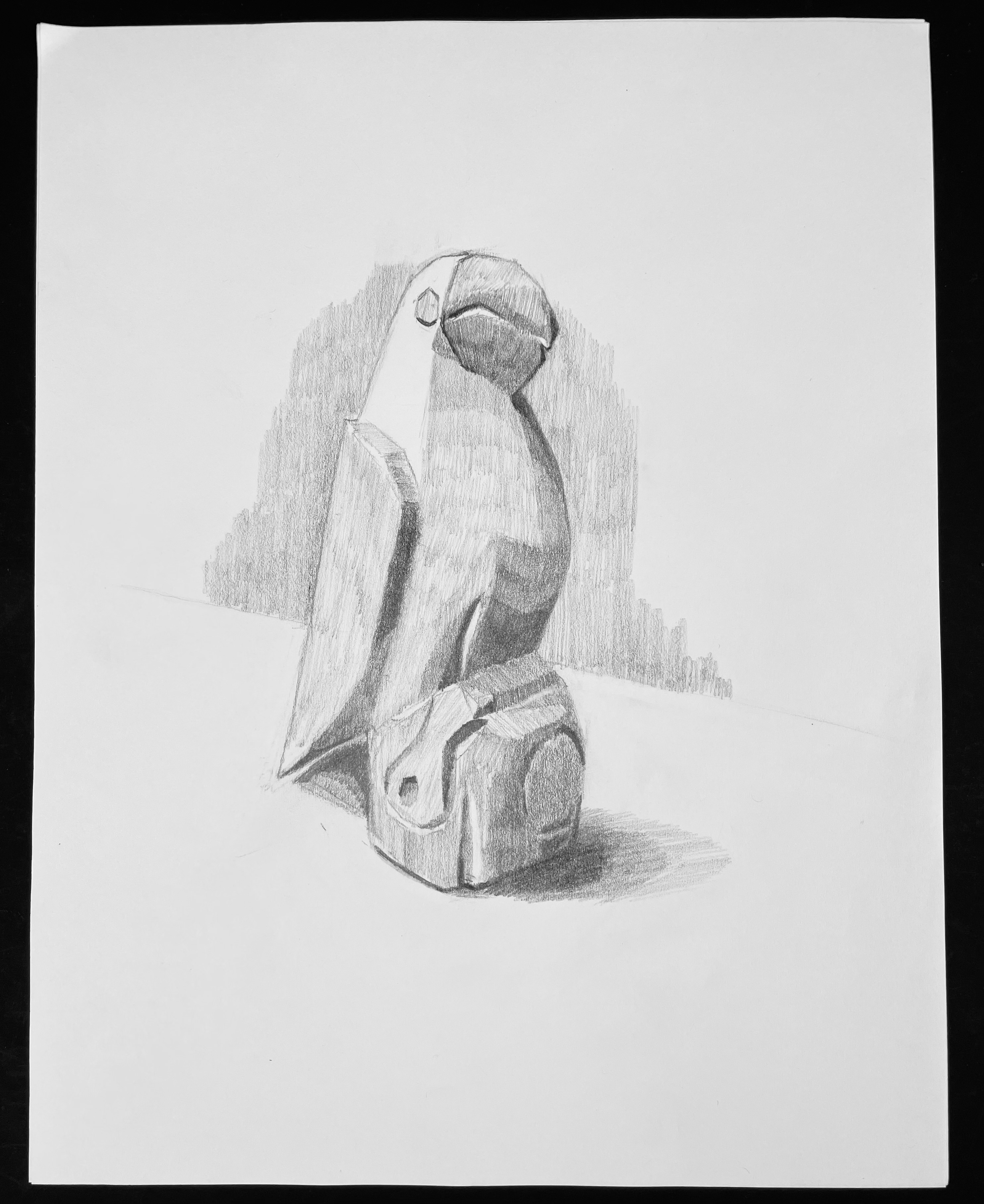
As someone who is slowly recovering from a compulsion to get everything correct, I still find myself feeling self-conscious about my interpretation. But this is where observation shifts from copying exactly what’s there to expressing what I find important, visually pleasing, or aesthetically satisfying. Trusting my own sensibility can feel a bit like stepping on to slippery ice but with practice, confidence begins to develop.
Simplification
Drawing a real bird can feel overwhelming. But this delightfully simple carving removes much of the detail. There are still chances to simplify the figure even more, however. Simplification is a practice all by itself: letting go of the need to say everything all at once. What do you leave in? What can you leave out? Simplification feels like a gentle path toward greater abstraction where I get to explore my own way of seeing. Instead of becoming upset by deviations from accuracy, I can be more experimental in choosing where to follow exactly what I see… or not.
For Insiders
Materials and process guidance
Additional photo reference for practice
Reflection questions
Applying the exercise to a real bird
