
Starting Again After Burnout
A gentle approach to intimidating projects
There was a time when I lost all my love for drawing birds.
A couple of years ago, I was asked to do illustrations for a book. At first, the project sounded like a lot of fun. But then I overcomplicated it. I did too much research, made too many preliminary sketches, stressed over small stuff. And as my deadline got closer, the feelings of anxiety went out of control: insomnia paired with perfectionism yielded burnout.
Not that I hadn’t been through burnout before, but this time was different. I felt hollowed out creatively. Nothing inspired me anymore, least of all the illustrations that I was supposed to be producing. I got the project done but at a huge cost to myself interiorly. It took months and months before I began to feel anything close to whole again.
This spring, I revisited the illustrations that I’d made in that season of anxiety and dread. I had done them all in graphite but many needed color. At first, as I gazed as these pieces, I felt defeated. My mistakes and all the angst I’d experienced earlier seemed to rise up to greet me. But then, something shifted. I began to see the drawings as a way to write a different ending to the story of my experience of burnout.
I decided to learn to love these illustrations.
To begin this journey, I chose the Slender-billed Nuthatch as my companion. Slender-billed Nuthatches (Sitta carolinensis aculeata) are actually a subspecies of the more familiar White-breasted Nuthatch. Anytime you visit a grove of Garryana Oaks in the Willamette Valley of Oregon, you’re likely to hear their honking, comical voices. If I was going to add a species to the Shire in Hobbiton, it would be this one. I’m sure Bilbo would include them in his poetry!
I had a detailed drawing in hand but I needed a way to get reacquainted. The easiest point of entry was to make loose sketches. This is a wonderful way to get to know any species, by the way. Doing quick sketches allowed me to get over my awkwardness and start to feel that I had something to offer to this bird.
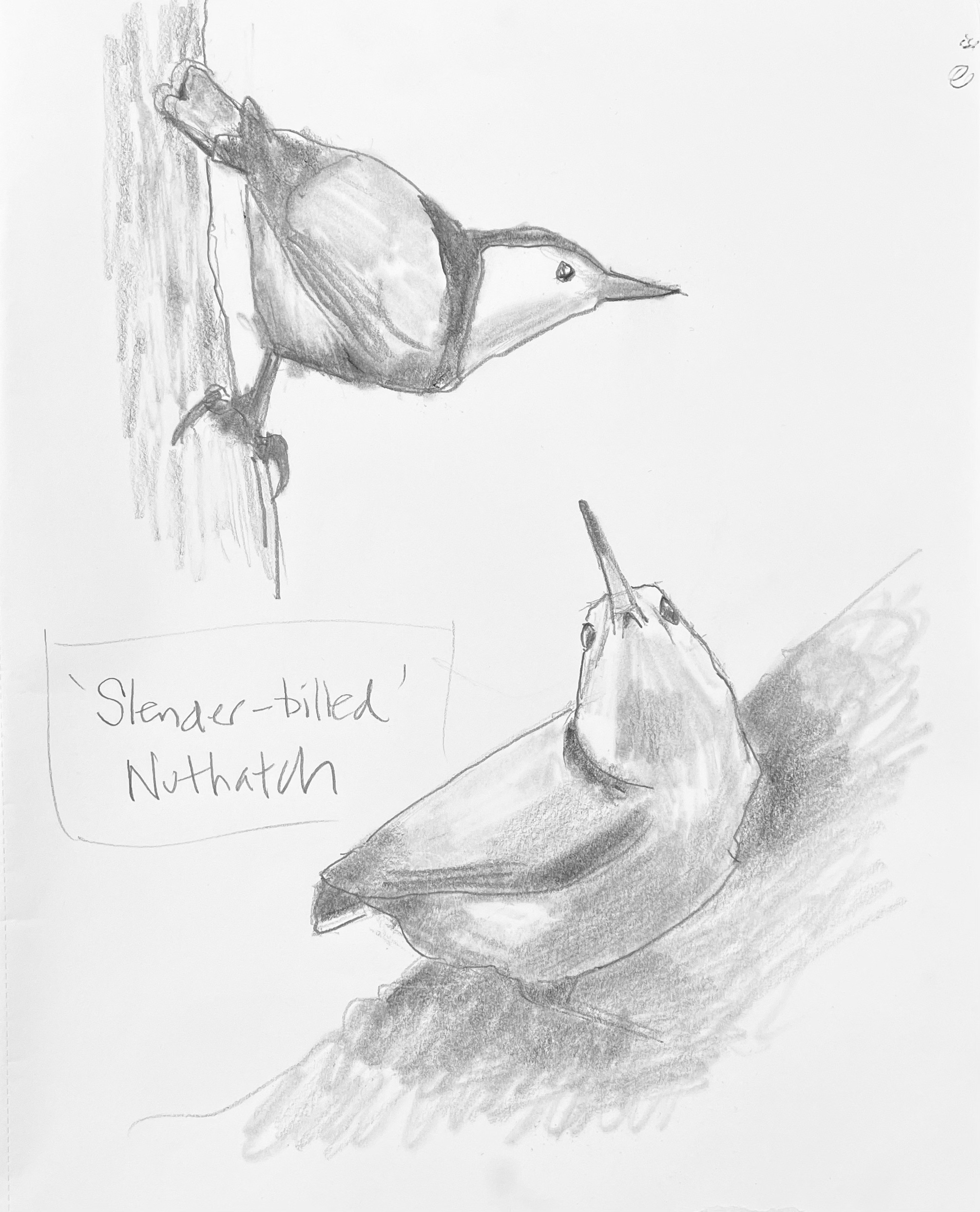
I realized that I needed to refresh my memory about the ecology of my nuthatch. Rather than read scientific reports, I asked my husband the ornithologist to tell me about them. The first thing he said was “they’re big tree specialists.” Immediately I felt my heart lift. I am enchanted by big trees! I always pat them on the trunk if they’re in reach and yes, I even give them hugs. And a big Garryana Oak is truly magical with a thick trunk, gnarly branches, and intriguing personality. No wonder these little nuthatches love to live among the oaks!
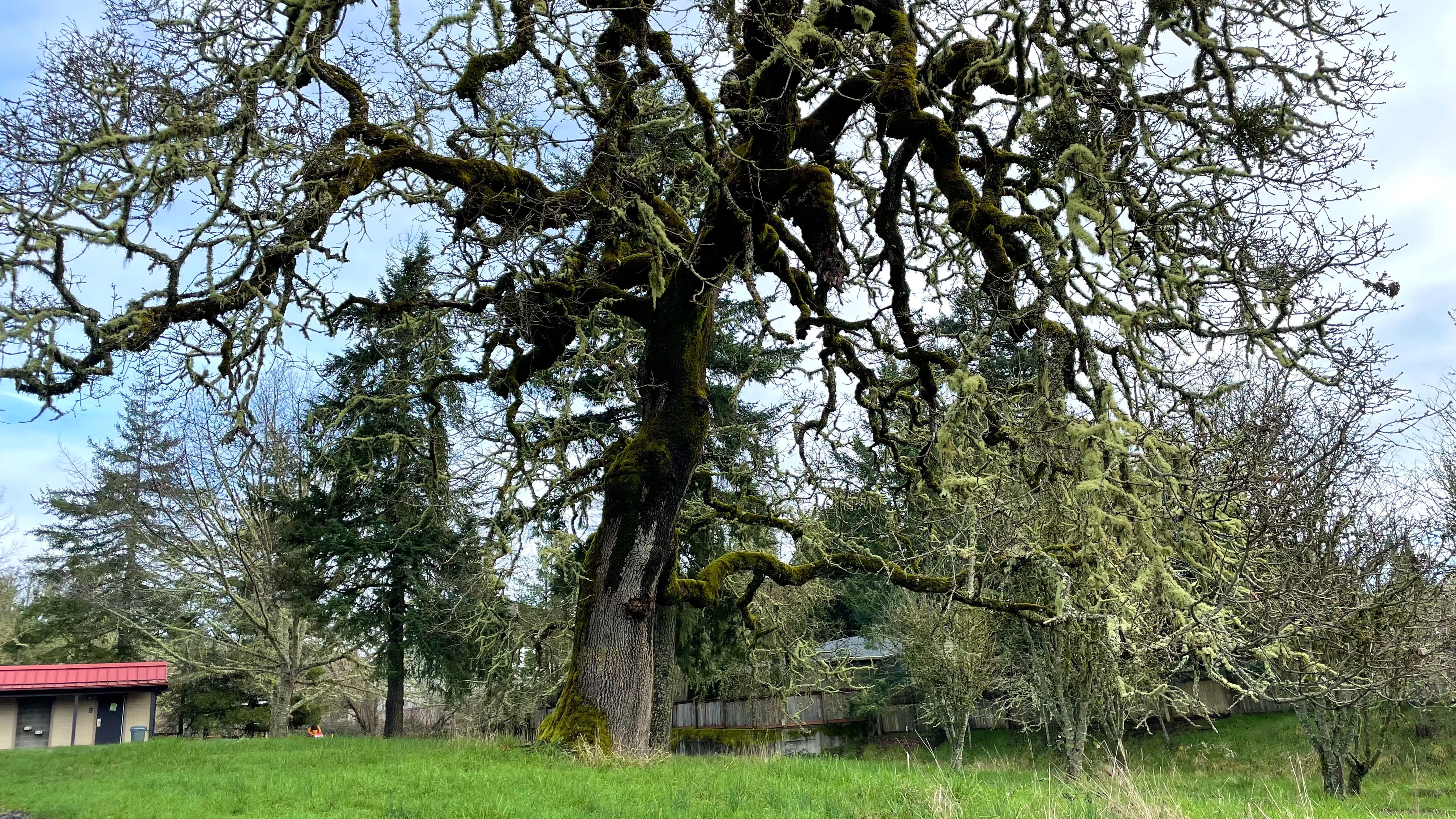
About this time, I was taking a class taught by Eliza Ivanova on developing style. I began experimenting with blending, lost edges, and abstraction. I depicted nuthatch forms that joined the trees as if they were a part of each other (which they are, in a sense). Looking back on it, this was when I started experiencing aesthetic ecstasy. I was in love!
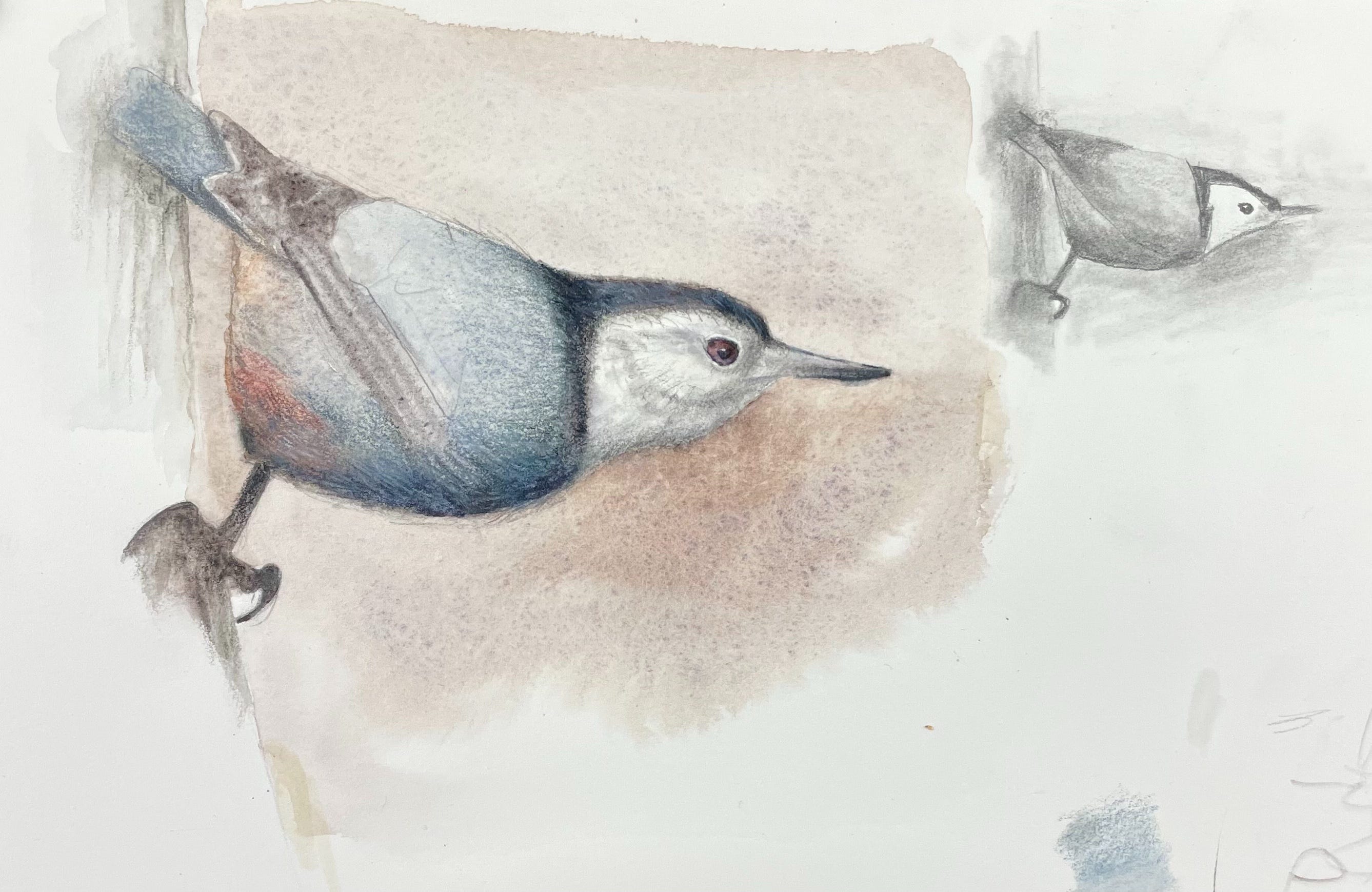
With my confidence on the rise, I made the move to color. I still struggle to think of myself as a painter but I stepped out on trust and used watercolor for the base layers of my study (I’ve included more details below for Insiders). Here I encountered one of the obstacles that had tripped me up in my season of burnout: biological accuracy. I began to worry that my way of seeing was wrong somehow. Never mind that my efforts made my heart feel happy. My fretting brain was not convinced.
So how did I let go of this concern? I’d like to tell you that there was an easy answer but in truth, I don’t quite understand how I made the leap. I know that my meditation practice played a part, simply learning to sit long enough to let my chattering mind go quiet. Transferring that interior stillness to my work opened the door to new possibilities and brought me out of the mire of worry.
With that steadiness, I was able to return to my original illustration, the one made during distress, to heal it and me at the same time. I was able to take risks and apply a new aesthetic. There are things I wish I had done differently back then, but I have such compassion for the me that made this drawing.
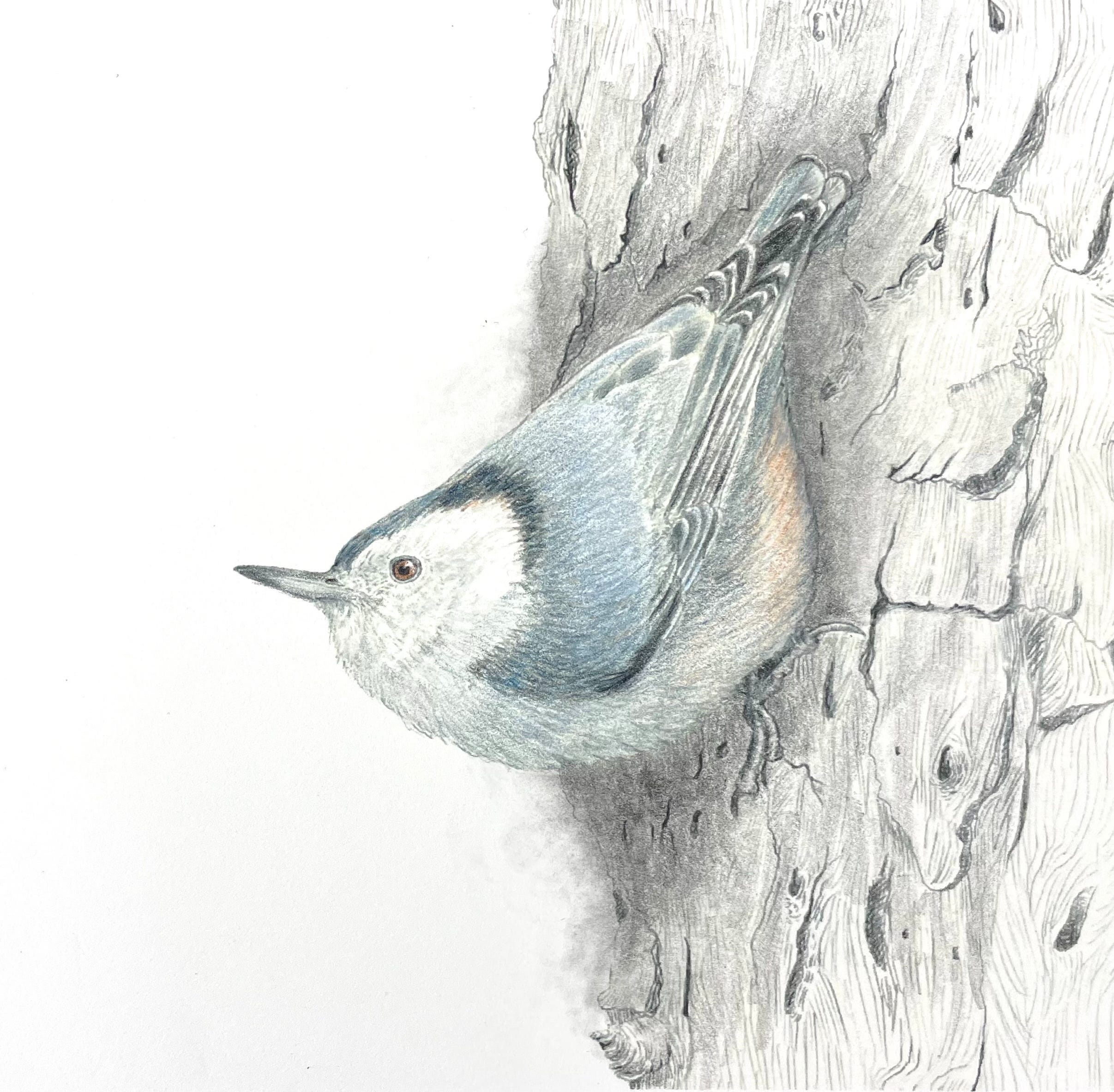
What I see now is that returning to this project after the pain of burnout was a lot like befriending a wild bird. Patience, proximity, stillness all play their parts. Being more gentle with myself but also acquiring a sense of resolve, a kind of courage, was needed, too.
If you find yourself returning after a difficult season in your creativity, you don’t have to will or effort your way through it. Instead, you can approach it with the same tenderness and care you’d have if you were in the presence of a shy animal. Offer it a gentle beginning. Observe it with attentiveness. You may find that it comes nearer of its own accord.
✨ If this reflection resonated with you—especially if you’re finding it hard to begin again—I’ve shared the full process behind this piece for Insiders.
Behind the Paywall, you’ll find an on-location sketch of a Garryana oak, a digital value study, and detailed color notes for both the preliminary and final illustration, along with a swatch of the exact palette I used. It’s a quiet, practical companion to the story—something you can return to as you take your own small steps forward.
