
When Online Learning Feels Like Drowning
Unexpected Lessons on the Art of Teaching with Care
I hated swimming lessons. When I was a kid, I was sent off to camp and put into a pool with a dozen other children. For the first lesson, my instructor wanted me to put my face in the water. Other kids mastered this skill instantly. Not me: I felt like I was drowning. I spent most of my summer sitting on the edge of the pool.
I thought about those swimming lessons as I tried to make sense of what stalled me during October and how quickly a lack of clear guidance can turn enthusiasm into inertia.
This was my first dive into Birdtober since 2022 and as a more experienced bird artist, I was looking forward to seeing what the daily practice would bring. As soon as I began to dig into the prompts, I realized that my usual ballpoint sketching wouldn’t do. I needed color.
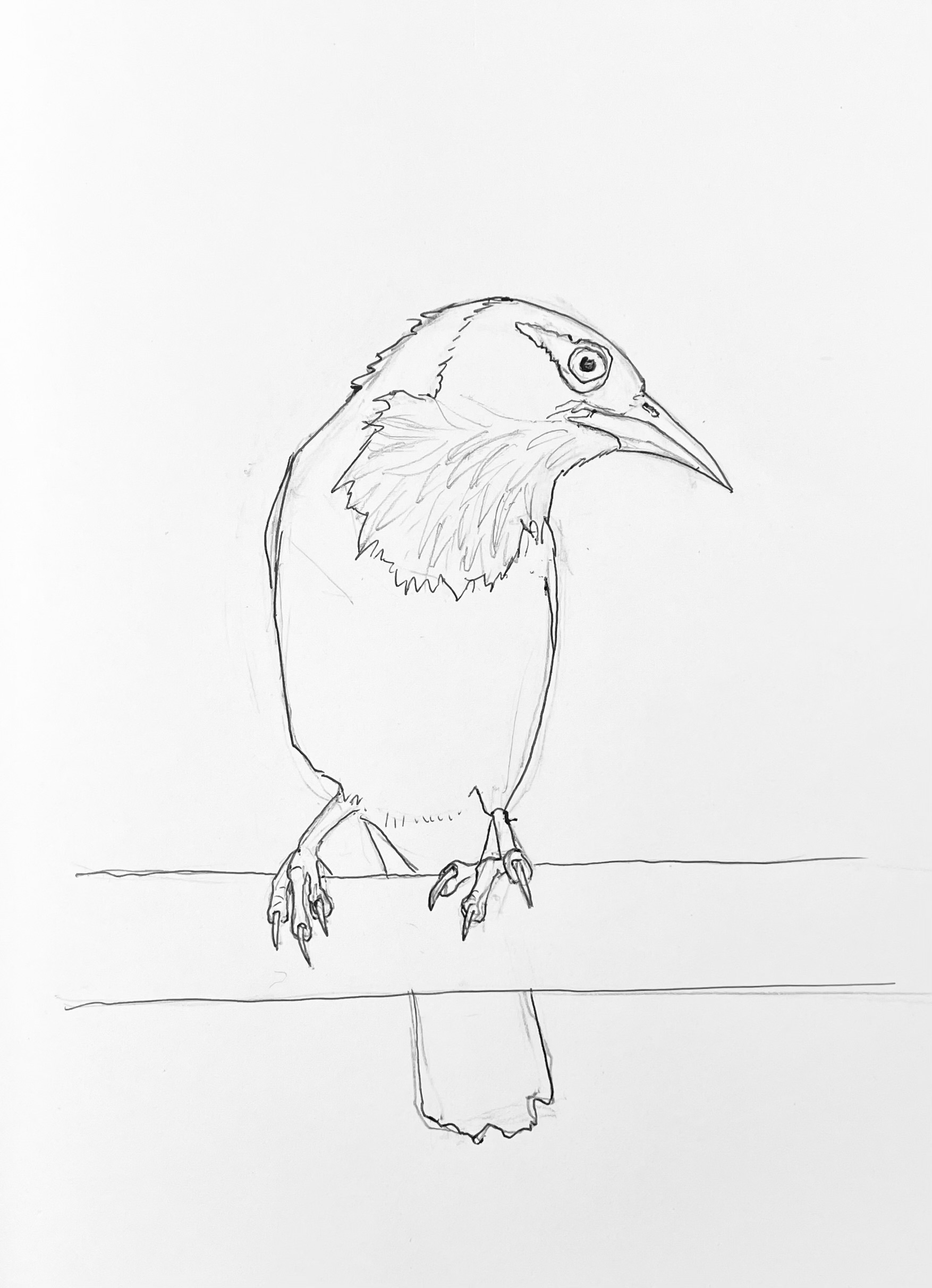
I had the idea that I could combine the challenge with my need to improve my skills in digital painting. My sketches would outpace my coloring abilities but so what? I’d just do the prompts that really excited me.
This went well, at first.
I found some videos by an instructor I admired. The first few lessons were great and I enjoyed the thrill of seeing new possibilities for my art practice. Even the first demo didn’t dampen my enthusiasm. Sure, he was going fast but I saw progress in my goal to paint birds in Procreate.
What I didn’t realize was that I’d floated into the deep end of the pool, so to speak. Instead of instructing as he worked, the teacher started talking to fill the space. While he chatted with himself, he zipped from brush to brush with lightning agility. To compensate, I slowed the video to a painful speed. I couldn’t turn the sound off because he might say something important so I was stuck listening to a voice that sounded like someone who was very, very stoned.
My enthusiasm evaporated. I wasn’t just stuck technically. I felt small, foolish, and alone in the learning. Looking back on it now, I see why this experience reminded me of that miserable summer camp. No one grows in competence when they’re left to master an uncomfortable skill with little support or else be relegated to the side of the pool.
It wasn’t that I lost interest; I lost my footing. Without clear steps, the work felt impossible, and I started to believe I was the problem.
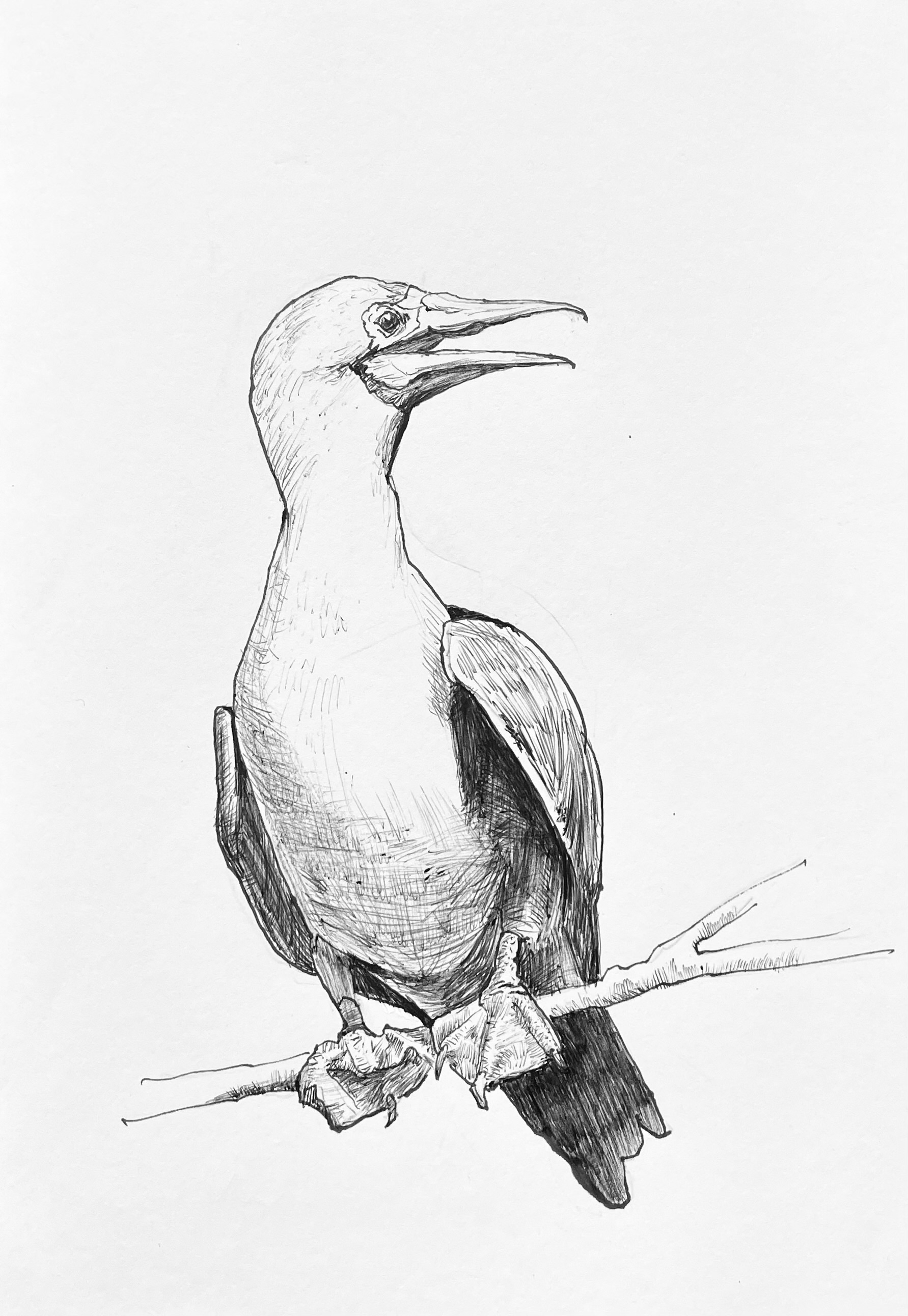
Fortunately, the term “scaffolding” had recently entered my vocabulary. In case you’re not familiar with it, scaffolding is a teaching approach that gives learners temporary supports while on the way to mastering more advanced skills. One way to visualize a “scaffold” is to place a grid over a photo as a way of learning proportions. The grid helps the student learn to see proportional differences and once that ability is in place, the scaffold is no longer necessary.
Rather than give up on the digital painting course1, I resolved to do some self-scaffolding. I looked at the art instruction I was getting with softer eyes and tried to find the bigger principles he was imparting to me.
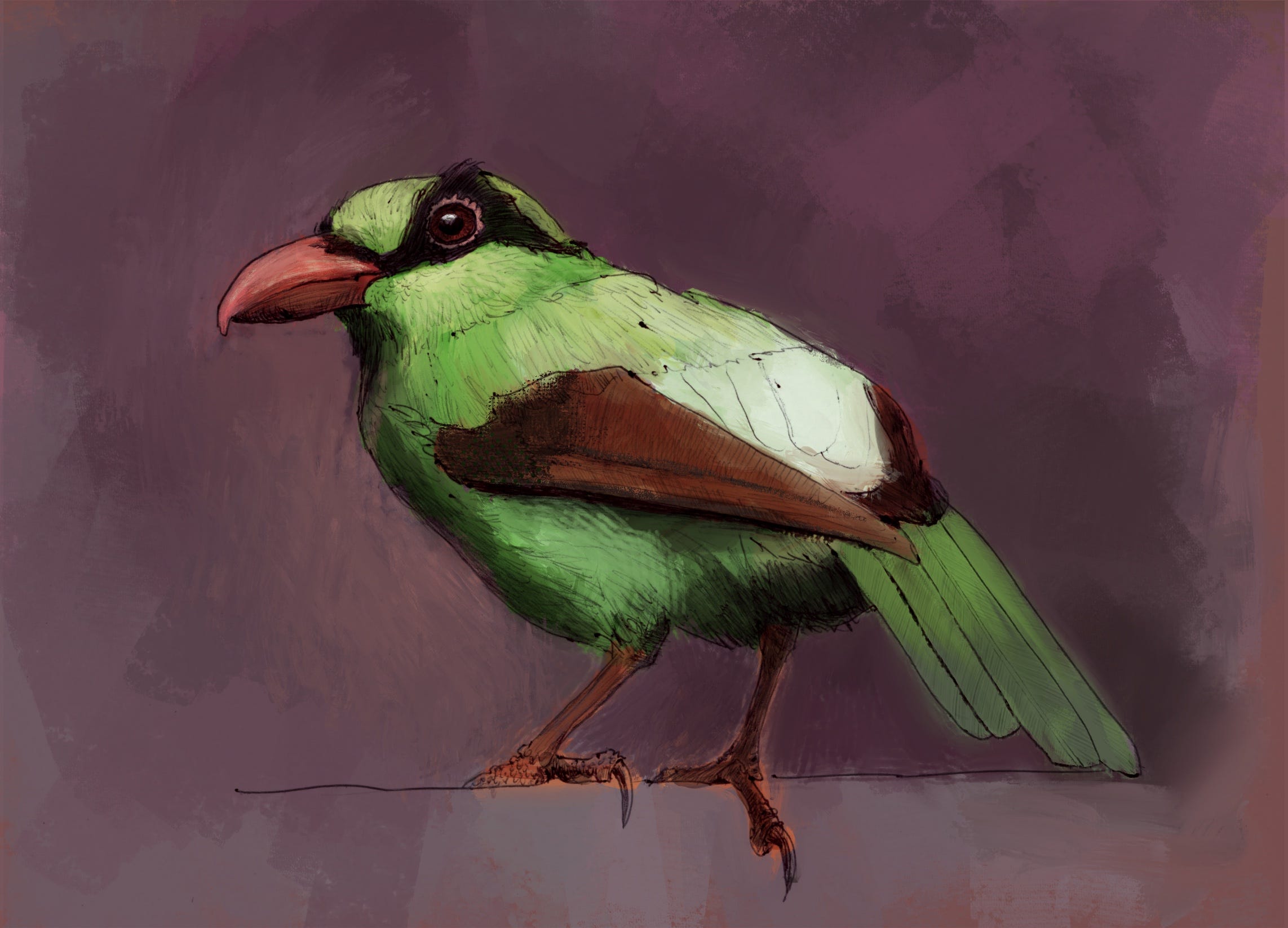
Birdtober didn’t unfold the way I had hoped, but it gave me a new clarity about how I want to teach art.
Part of the reason I’m on Substack is to share what I’ve learned about how to draw birds — techniques, references, and insights to help others grow in their own bird art practice. This kind of contribution feels important because I’ve grown through the generosity of so many artists who teach and share their craft online. For my teaching to matter, it has to come with care: a framework that welcomes learners at any stage and helps them grow in confidence.
If I could go back to six year old me sitting on the edge of the pool, I’d invite her into the water and ask her to take the tiniest action toward putting her face in. We all have our own edges like that, the places we hover just outside of courage. The smallest motion toward the water can be enough.
🪶 If you’ve enjoyed my posts and sketches, becoming an Insider is a simple way to support my work and it helps me dedicate more time to creating the tutorials, references, and behind-the-scenes content you love. Every paid subscription makes it possible to keep sharing more with you.
In an earlier post, I wrote about this course as “learning in color.” I was genuinely excited about the new instruction I’d found and I still am. This experience simply showed me where my learning needed more support, a reminder that lessons keep teaching long after they end.
Your digital painting results are fantastic. I’m so glad you persisted!
Thanks. I’m Starting to teach watercolour myself and this is a great reminder not to fill the gaps with words but explain the process step by step. It’s easy to forget how to be a beginner.