
When Sketching Still Feels Daunting (Even After Hundreds of Drawings)
Finding Growth in the Uncomfortable Moments
On the shelf in my studio, I have over a dozen completed sketchbooks. In one, I estimate I drew more than 200 birds1. Some volumes record long, unbroken streaks of daily drawing. I’ve done full years of daily sketching (twice) and lost count of how many 100-day projects I’ve completed. With all that practice, you’d think I’d feel confident at the sight of a blank page.
But I don’t.
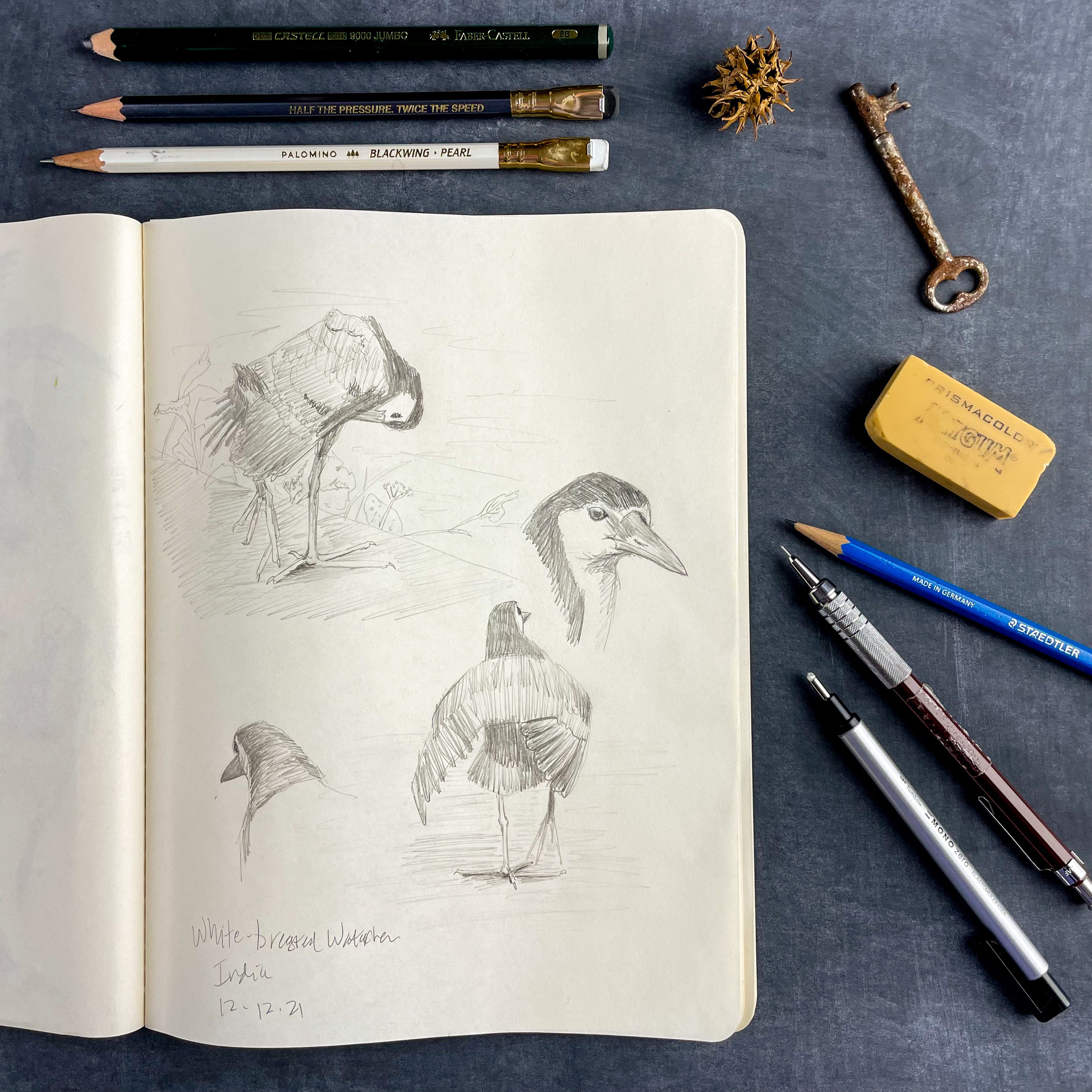
Every time I sit down to draw, there’s still that lurking sense of dread. And I know I’m not alone.
Recently I watched a demo by a very accomplished artist. Before she even began painting, she admitted she felt overwhelmed by the subject. I cringed a little. I wanted to believe that with enough practice, I’d eventually cross some magical threshold — that the discomfort would vanish and confidence would take over for good. But the truth is: discomfort often stays.
I’ve struggled with this in other areas too. Years ago, I signed up for an intensive course on linear perspective. I thought that with enough instruction, I’d finally “get it.” But 20 hours in, I quit. Every day I tried to study and I ended up in tears. The discomfort felt unbearable.
So what does discomfort really mean and how do we work with it?
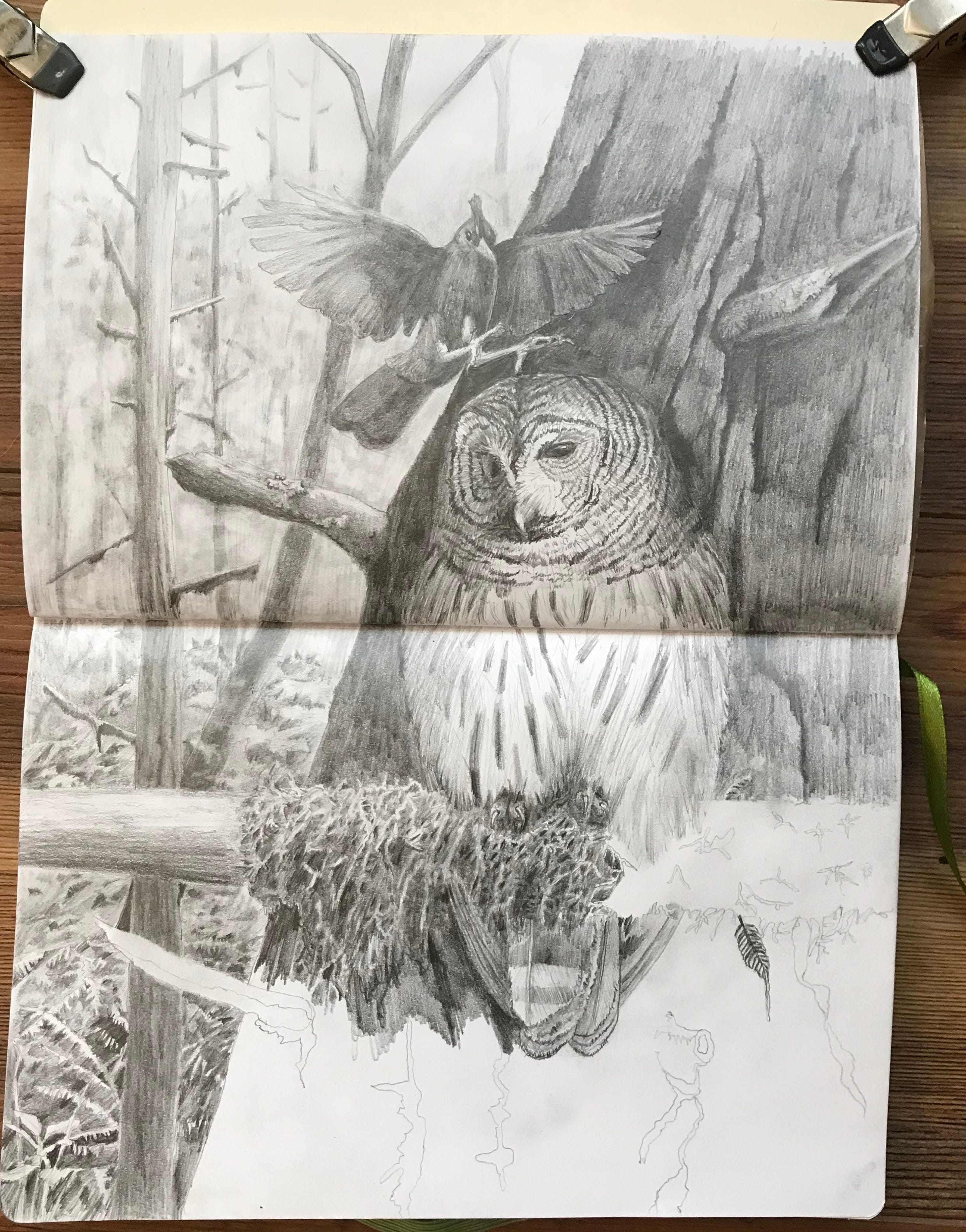
The Science of Discomfort
Over time, I’ve come to see dread and reluctance not as red flags, but as normal companions to the creative process. Science even backs this up. Dr. Kevin Majeres, a psychiatrist at Harvard Medical School, explains that this discomfort comes from neurochemicals called dynorphins. Think of dynorphins as the opposite of endorphins: instead of a “feel-good” rush, they make you feel bad.
The dynorphins themselves aren’t dangerous. The real problem is our unwillingness to feel them. Resisting dynorphins makes the discomfort intolerable.
Over time, I’ve come to see dread and reluctance not as red flags, but as normal companions to the creative process.
Looking back at my attempts to learn linear perspective, I see that what I really wanted was for the pain to stop. But dynorphins don’t work that way. Run away from them, and they only come back stronger.
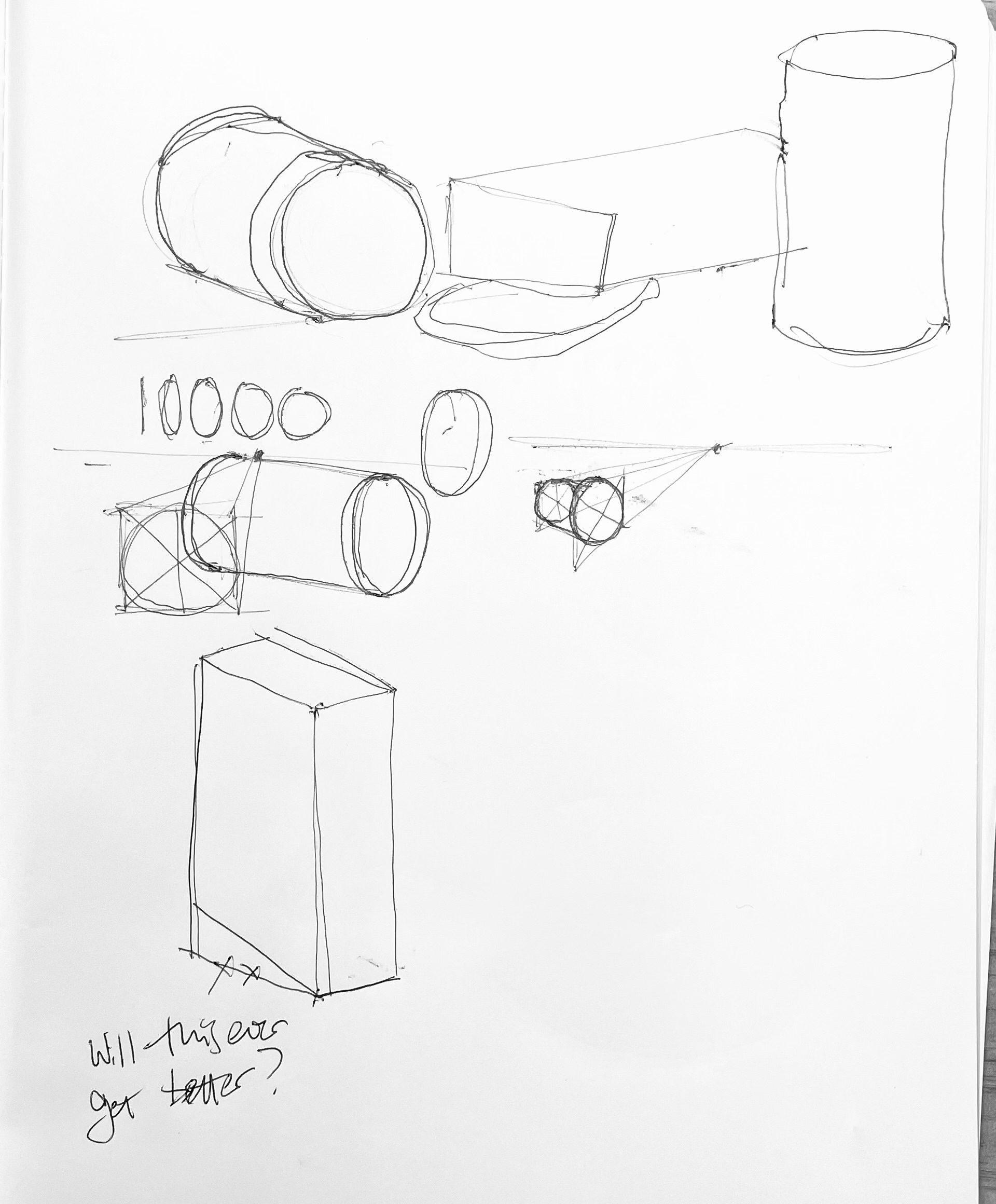
Here’s the paradox: growth only happens through challenge, and challenge always comes with dynorphins. So that uneasy feeling before (and sometimes during) drawing? It isn’t an obstacle. It’s an invitation to grow.
Growth only happens through challenge and challenge always comes with discomfort.
From Dread to Dopamine
Think about it this way: if you wanted to improve your cardio fitness, you’d expect to get out of breath, right? Creative work is no different. Those uneasy sensations mean you’re facing a challenge. They’re proof you’re in the growth zone.
The key is willingness. Willingness to feel the discomfort, to let it be there. That’s how discomfort becomes a doorway.
Here’s the practice:
Expect discomfort.
Welcome it: breathe.
When the craving to escape arises — to check email, scroll, distract yourself — notice it. Feel the urge. But choose willingness instead of distraction. Remain with your feelings until they ease off.
Because when you remain with discomfort, something else happens. On the other side of dynorphins is dopamine — the brain’s natural reward chemical. But here’s the catch: if you escape the challenge, you still get a little dopamine hit, but at a cost. Your dynorphin baseline rises, leaving you with more dread next time.
Stay with it, though, and dopamine becomes a true reward — a reinforcement for growth, not avoidance. And if you focus on the process instead of the outcome, that reward only deepens.
Redefining Discomfort
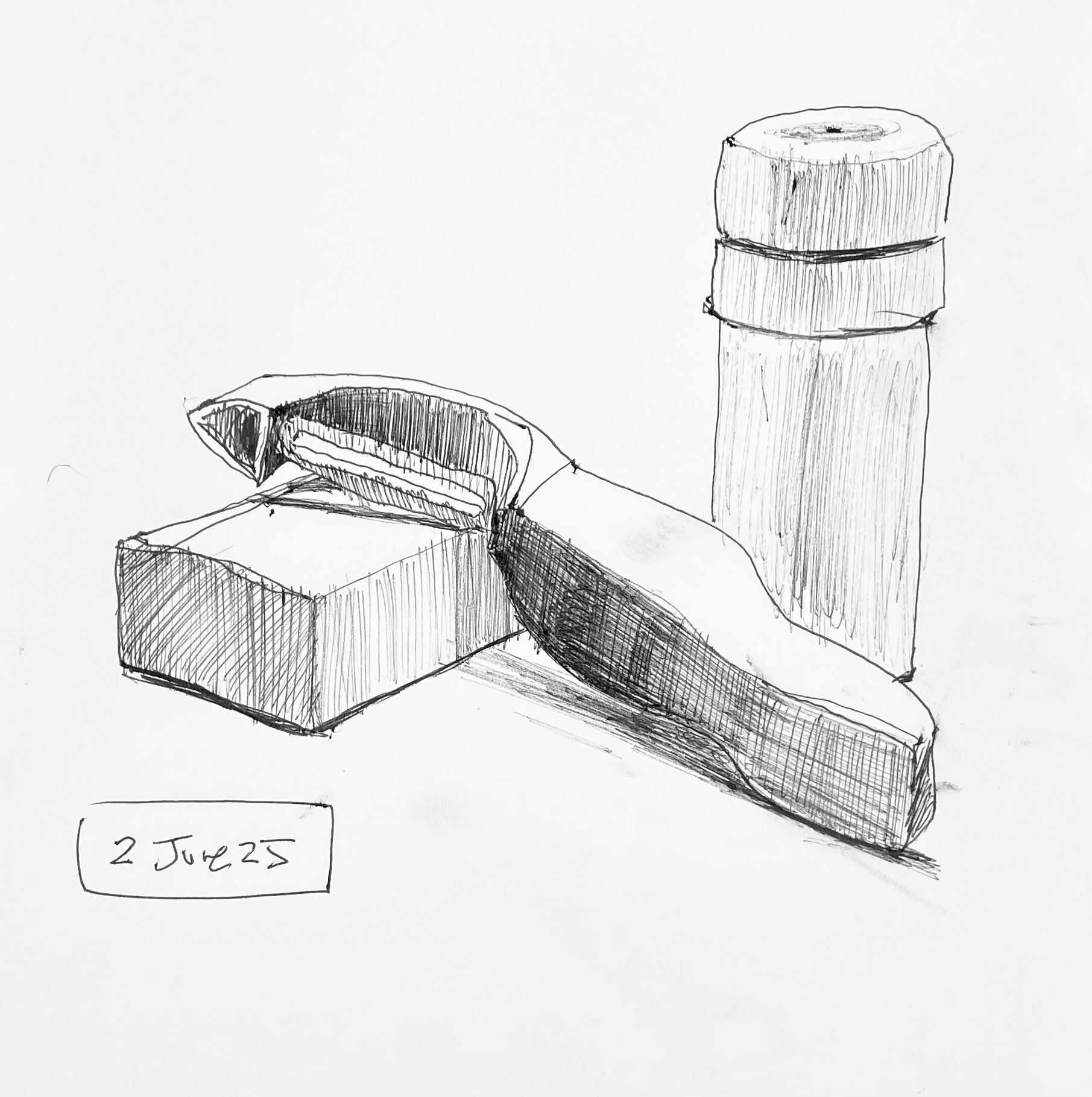
When I sit down to sketch now, I expect some dread and I remind myself: this is a normal feeling. The same goes for my perspective studies. I still experience the discomfort, but I know what it means now — and that makes it easier to keep going. Even better, each time I weather these feelings, I grow stronger and more persistent in my art practice.
While the discomfort remains, it no longer means there’s something amiss. With willingness, I’m coming to see it as a teacher, a companion, a guide.
👉 Do you notice this, too — the feelings of dread or discomfort before beginning your creative work? How do you usually respond?
Thanks for sharing this! I should print and frame that post and put it on the wall over my desk. Then read it at the beginning of each sketching session 😊
Finally someone can speak factually to this horrible anxiety that I experience that has prevented me from pursuing improving my skills for years. I have gotten so frustrated with the usual trite responses of 'It's because someone criticized your art.' Nonsense. I was always praised for my 'artistic ability'. My father, a working class man, encouraged me to study art. Can you imagine? I told him I had to get a job. Haha. So where did this anxiety come from that could actually make me feel sick and make me want to smear black paint onto every nearby surface. They said express yourself. haha. I have recently had a break through but didn't understand the source or extent of the inhibition. I'm sure your explanation will go a long, long way to equipping me and others to overcome this painful resistance to accomplishing something that I seem driven to do. I can't thank you enough.